
Lifestyle
Russia-Ukraine Ceasefire: What’s Been Agreed, What Hasn’t, and Where Talks Stand

Introduction
People searching “Russia-Ukraine Ceasefire” usually want a fairly direct answer: has the fighting actually stopped, or is it about to? The honest answer involves more nuance than a single headline can capture. The war has produced several short truces, multiple rounds of high-level negotiation, and at least one moment when officials described a deal as nearly finished, without any of it adding up to a lasting ceasefire so far.
This article lays out what a ceasefire would actually mean in this conflict, what’s been tried since negotiations intensified in 2025, why a lasting agreement has been so difficult to reach, and where things stand as of this writing.
Direct Answer
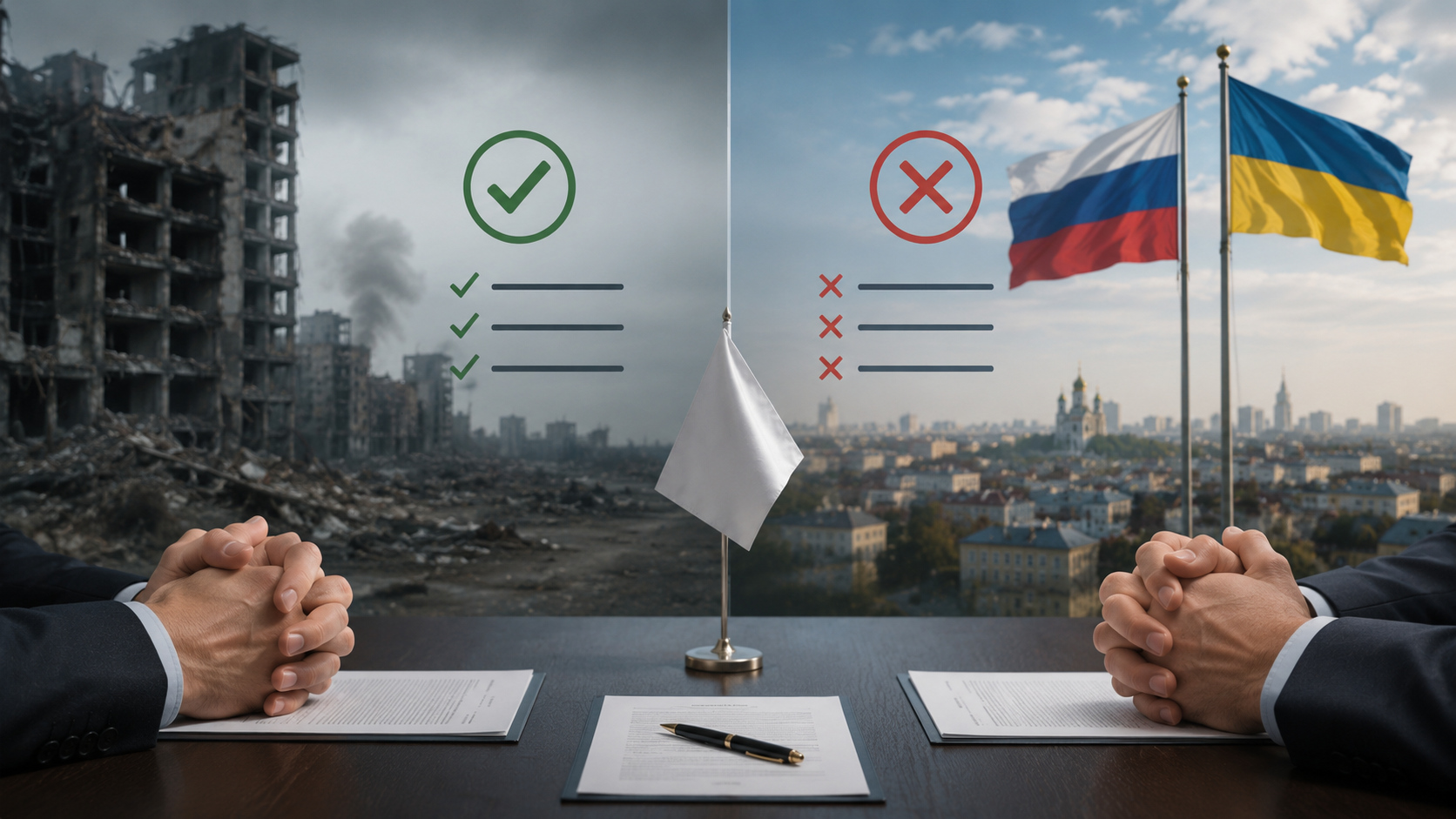
As of mid-June 2026, there is no comprehensive ceasefire between Russia and Ukraine. Negotiations involving the United States produced two short truces in 2026, timed around Orthodox Easter and Russia’s Victory Day, but both sides accused each other of violations during those windows, and fighting resumed once they ended. Broader peace talks remain active but haven’t produced a final agreement.
What “Ceasefire” Actually Means Here
It helps to separate three terms that often get used loosely in coverage of this war.
A ceasefire is an agreement to stop fighting. It can be partial, limited to certain regions or types of targets, or comprehensive, covering the entire front line.
A truce usually means a short, temporary pause, often tied to a specific date like a holiday, rather than an open-ended halt to the war.
A peace agreement goes further than either one. It would resolve the underlying disputes behind the war, such as territorial control, security guarantees, and sanctions, rather than just pausing the fighting.
Most of what’s happened so far falls into the first two categories. The 2026 truces tied to Orthodox Easter and Victory Day were short, time-limited pauses, not steps toward a comprehensive ceasefire on their own, even though officials sometimes described them as confidence-building measures.
Background: Why a Ceasefire Has Been on the Table
Russia launched a full-scale invasion of Ukraine in February 2022, and the war has continued since, with shifting front lines and waves of diplomatic activity that mostly failed to produce a lasting halt to the fighting. Earlier ceasefire attempts in the years before 2025, including short pauses tied to humanitarian corridors, also fell apart quickly.
Negotiations took on a different shape starting in 2025, when the incoming US administration made ending the war an explicit priority. That shift is the main reason “ceasefire” searches picked up: a sustained, high-profile diplomatic push, not just battlefield developments, put the question of an actual ceasefire back at the center of the news cycle.
How the 2025-2026 Negotiations Unfolded
The pace of these talks is easier to follow as a rough timeline.
Early 2025: The new US administration appointed a special envoy to the conflict and initially aimed to reach an agreement within roughly 100 days. That target wasn’t met.
March 2025: Ukraine agreed to a 30-day partial ceasefire proposal following a brief pause in US military aid and intelligence sharing, which was later restored. Russia’s government said it supported a pause on strikes against energy infrastructure but argued that a full ceasefire required addressing what it called the root causes of the conflict first.
May and June 2025: Russian and Ukrainian officials held direct talks for the first time in roughly three years. Both rounds produced agreement on prisoner exchanges but no breakthrough on a ceasefire itself, with each side presenting its own outline for a broader settlement.
August 2025: The US and Russian presidents met in Alaska. No ceasefire resulted, but the meeting was followed by a separate session involving Ukraine’s president and European leaders, along with plans for further talks.
Late 2025: By a December meeting between the US and Ukrainian presidents, officials described the broad outline of a deal as largely settled, with the status of the eastern Donbas region named as one of the main unresolved issues. Russia has pushed for control over the full region, while Ukraine has resisted ceding territory it still holds there.
April 2026: A roughly 32-hour truce tied to Orthodox Easter took effect, following a proposal from Ukraine’s president and terms set by Russia’s president. A prisoner exchange, involving close to 175 people, took place beforehand as a goodwill gesture. Both governments reported continued military activity during the truce window, with Ukraine citing a large number of Russian drone strikes as violations.
May 2026: A three-day truce coincided with Russia’s Victory Day commemorations, again including a prisoner exchange. US officials framed the pause as a potential turning point. Within the truce period, Russian and Ukrainian officials each accused the other of continued attacks, and large-scale fighting resumed once the window closed.
Mid-2026: US-mediated talks continued in locations including Geneva and Abu Dhabi, focused partly on how a ceasefire could actually be monitored along the front line. Those talks made limited progress before pausing, and no comprehensive ceasefire has followed.
Why a Full Ceasefire Has Been Difficult to Reach
A few recurring sticking points explain most of the delay.
Territorial disputes. Russia has sought control over the entire Donbas region, including areas its forces haven’t captured, while Ukraine’s government has said it won’t formally cede that territory.
Verification. Both sides have repeatedly accused each other of violating even short, narrow truces, which raises a practical problem: how would a longer ceasefire actually be monitored and enforced along an active front line?
Security guarantees. Ukraine has pushed for binding security commitments from Western governments as part of any settlement, arguing that a ceasefire without guarantees risks simply pausing the war rather than ending it.
Sanctions and economic terms. Russia has tied some of its conditions to sanctions relief, while Western governments have used sanctions as leverage in the broader negotiation.
A trust deficit. After multiple short truces collapsed amid mutual accusations, both governments have entered later rounds of talks with less confidence that the other side would actually honor a longer pause.
Current Status and Outlook
As of mid-June 2026, fighting continues along the front line, including missile and drone strikes reported by both sides in the days leading up to this writing. Diplomatic talks remain active but haven’t produced a comprehensive ceasefire. Analysts and prediction markets tracking the negotiations have generally assigned a low probability to a full ceasefire being reached in the immediate term, pointing to the stalled state of the Geneva and Abu Dhabi talks and the unresolved Donbas question in particular.
None of that rules out a shift. The war has already seen several moments, including the December 2025 talks and the run-up to the May 2026 truce, where officials described an agreement as close, only for talks to stall again shortly after. Anyone tracking this topic should treat a specific date or probability tied to a future ceasefire as a snapshot of negotiating momentum at that moment, not a fixed prediction.
Common Mistakes and Misconceptions
A frequent mix-up is treating any announced truce as evidence that the war has effectively ended. The Easter and Victory Day truces in 2026 were short, time-limited pauses, and fighting resumed at scale once each one expired.
Another common error is assuming media reports of ceasefire violations are independently verified in real time. Russian and Ukrainian officials have repeatedly issued conflicting casualty and violation figures during truce periods, and outside news organizations have generally been unable to confirm battlefield claims from either side as events unfold.
It’s also easy to conflate a ceasefire with a peace agreement. A ceasefire only pauses military operations. The harder questions, like where borders end up, what security guarantees apply, and how sanctions are handled, belong to a peace settlement, not a ceasefire itself.
Finally, some coverage frames this as a two-party negotiation between Russia and Ukraine alone. In practice, the United States has played a direct mediating role since 2025, and European governments have pushed for a larger role at the table as talks have continued.
Real-World Example: The May 2026 Victory Day Truce
The May 2026 truce is a useful case study in how these short pauses have typically played out. The US announced that Russia and Ukraine had agreed to a three-day halt in fighting tied to Victory Day, alongside a prisoner exchange, describing it as a potential turning point in the war.
Within the truce window, Ukrainian officials reported Russian artillery and drone strikes causing casualties in several regions, while Russia’s defense ministry reported its own count of Ukrainian violations and said its forces had responded to them. By the time the truce expired, both governments were publicly blaming the other for the lack of a genuine pause, and large-scale fighting resumed shortly after. The episode illustrates why short, symbolic truces haven’t yet translated into the kind of durable ceasefire both sides have, at different points, said they wanted.
Key Facts
- No comprehensive ceasefire between Russia and Ukraine was in place as of mid-June 2026.
- The US made ending the war a stated priority starting in early 2025, appointing a special envoy and pushing multiple rounds of direct talks.
- Two short, holiday-linked truces took place in 2026: roughly 32 hours around Orthodox Easter in April, and three days around Victory Day in May.
- Both 2026 truces included prisoner exchanges but were followed by mutual accusations of violations.
- The status of Ukraine’s Donbas region has repeatedly been named as one of the central unresolved issues in broader peace talks.
- US-mediated talks in Geneva and Abu Dhabi addressed ceasefire verification but stalled without a comprehensive agreement.
Frequently Asked Questions
Is there a ceasefire between Russia and Ukraine right now?
No comprehensive ceasefire was in place as of mid-June 2026. Short, temporary truces occurred earlier in the year, but fighting has continued outside those specific windows.
What’s the difference between a ceasefire and a peace deal? A ceasefire stops the fighting, either fully or in part. A peace deal goes further, resolving issues like territorial control, security guarantees, and sanctions. Talks over this conflict have touched on both, but a full peace deal hasn’t been finalized.
Why have short truces failed to lead to a lasting ceasefire?
Each side has accused the other of violating the truces shortly after they began, and the underlying disputes, especially over the Donbas region and security guarantees, remain unresolved.
Who is involved in the negotiations?
Russia and Ukraine are the direct parties, with the United States playing an active mediating role since early 2025. European governments have also pushed for greater involvement as talks have progressed.
What are the main sticking points?
Control over the Donbas region, security guarantees for Ukraine, sanctions relief for Russia, and how a ceasefire would actually be verified along the front line have all been cited as unresolved issues.
Is a full ceasefire likely soon?
Analysts and prediction markets tracking the talks have generally assigned a low probability to a comprehensive ceasefire in the near term, given the stalled state of recent talks, though the situation has shifted quickly before and could shift again.
Key Takeaways
- As of mid-June 2026, there’s no comprehensive ceasefire between Russia and Ukraine, despite multiple rounds of negotiation since early 2025.
- Two short truces happened in 2026, tied to Orthodox Easter and Victory Day, but both were followed by mutual accusations of violations.
- The Donbas region’s status remains one of the central unresolved issues in broader talks.
- A ceasefire and a peace agreement are different things: a ceasefire pauses fighting, while a peace deal resolves the underlying disputes.
- The United States has played an active mediating role since 2025, with European governments seeking a larger role as talks continue.
Conclusion
The path toward a Russia-Ukraine ceasefire has moved in fits and starts: periods of apparent progress followed by stalled talks, and short truces that didn’t hold past their announced end date. As of mid-June 2026, the underlying disputes over territory, security guarantees, and verification remain the main obstacles to a lasting agreement, even as diplomatic talks continue. Anyone following this topic closely should expect the details here to keep shifting, since that’s been the pattern of this negotiation since it began in earnest in 2025.
Introduction
Few bodies of water carry as much weight — economically, ecologically, and geopolitically — as the Gulf of Oman. It connects the Arabian Sea to the Strait of Hormuz, making it a critical passage for a significant portion of the world’s oil supply. Yet it is also a place of remarkable marine biodiversity, ancient trade history, and growing environmental concern. Whether you are studying it for geography, tracking energy markets, or planning a visit to the region, understanding the Gulf of Oman means understanding one of the most consequential stretches of water on the planet.
Direct Answer: What Is the Gulf of Oman?
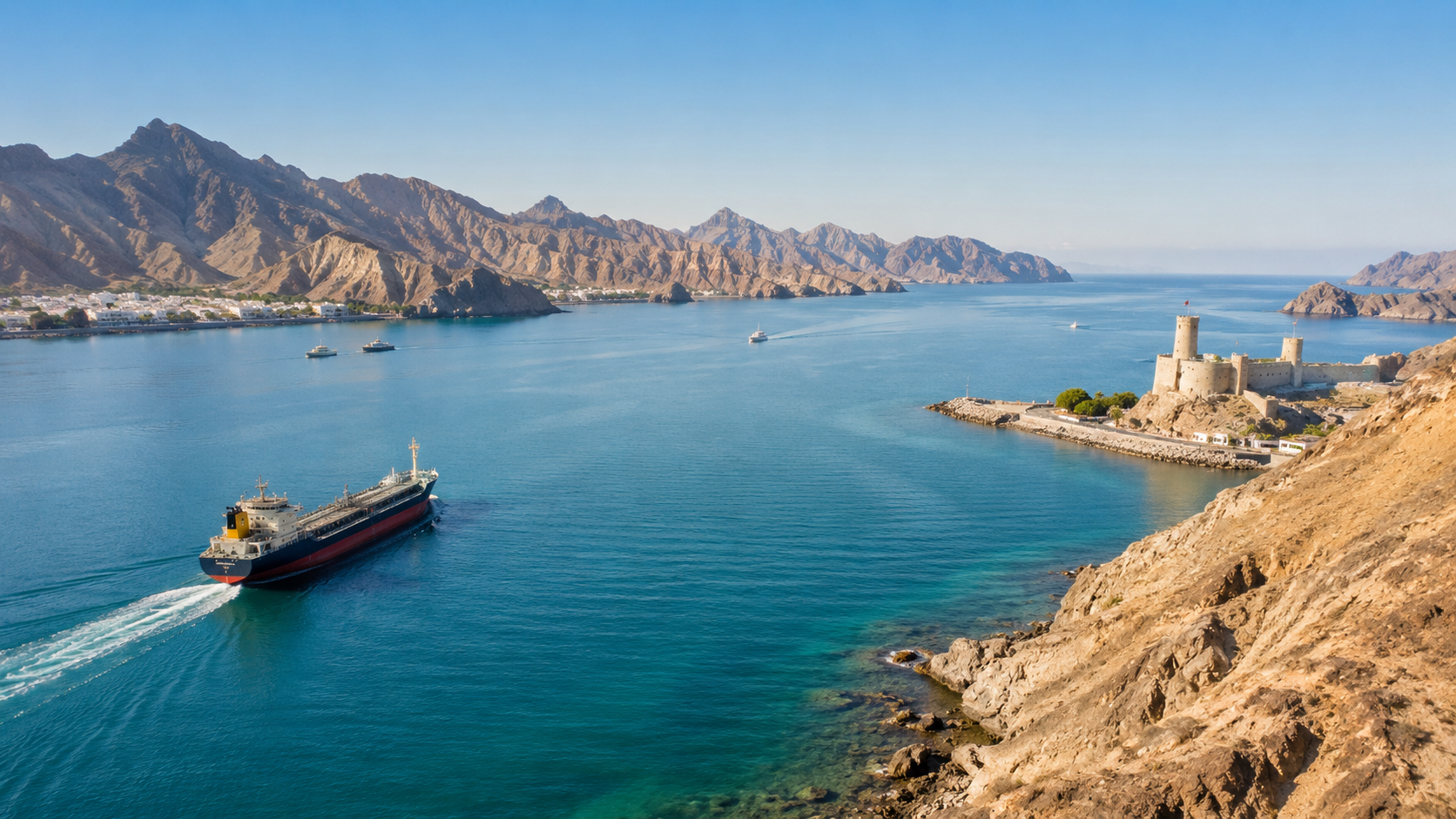
The Gulf of Oman is a body of water located in the northwestern part of the Arabian Sea, connecting the Arabian Sea to the Strait of Hormuz and the Persian Gulf beyond it. It is bordered by Oman to the south and west, Iran to the north, and Pakistan to the east. Stretching roughly 560 kilometers in length, it serves as the primary maritime gateway for oil tankers leaving the Persian Gulf and is one of the most strategically significant waterways in the world.
Where Is the Gulf of Oman Located?
The Gulf of Oman sits at the junction of several major geographic and political regions. To the south and southwest lies the Sultanate of Oman, whose coastline forms the longest continuous shoreline along the gulf. To the north, Iran’s southern coast runs along the gulf before narrowing into the Strait of Hormuz. Pakistan’s Balochistan province borders the eastern edge.
The gulf opens westward into the Strait of Hormuz — one of the world’s most critical maritime chokepoints — and then into the Persian Gulf. To the east and south, it merges with the broader Arabian Sea, which connects to the Indian Ocean.
This geographic position is not incidental. The Gulf of Oman essentially acts as the threshold between the open ocean and the oil-producing nations of the Persian Gulf. Nothing moves in or out of the Persian Gulf by sea without passing through it.
Key Geographic Facts
- Length: approximately 560 kilometers (350 miles)
- Width: approximately 320 kilometers (200 miles) at its widest point
- Maximum depth: around 3,694 meters (12,120 feet)
- Bordering countries: Oman, Iran, and Pakistan
- Connected waterways: Strait of Hormuz (to the west), Arabian Sea (to the east)
- Major ports: Muscat and Salalah (Oman), Bandar Abbas (Iran), Gwadar (Pakistan)
The Strait of Hormuz Connection: Why It Matters
To understand the Gulf of Oman, you have to understand the Strait of Hormuz. The strait is the narrow waterway connecting the gulf to the Persian Gulf, and it is the only sea route for tankers carrying oil from Saudi Arabia, Iraq, Kuwait, the UAE, and Qatar to the rest of the world.
At its narrowest, the Strait of Hormuz is only about 33 kilometers wide, with the navigable shipping lanes being considerably narrower. Roughly 20 to 21 million barrels of oil pass through it daily — a figure that represents about 20 percent of global oil consumption. Every one of those tankers must cross the Gulf of Oman to reach the open ocean.
This is why any tension in the region — whether a military incident, a diplomatic standoff, or a threat to shipping — immediately draws global attention. A disruption to transit through the Gulf of Oman does not just affect the Middle East; it affects fuel prices and energy security worldwide.
History and Trade Along the Gulf of Oman
The Gulf of Oman has been a commercial waterway for thousands of years. Long before oil tankers, it carried frankincense, spices, pearls, and textiles between the Arabian Peninsula, Persia, the Indian subcontinent, and East Africa.
Oman’s position along the gulf made it one of the great maritime trading nations of the ancient and medieval world. Omani sailors mastered monsoon navigation, using seasonal wind patterns to sail efficiently to India in one season and return in the next. The port city of Muscat became a major hub along these routes, and Omani influence at one point extended to East Africa’s Swahili coast and as far as Zanzibar.
The arrival of Portuguese explorers in the late 15th century brought European powers into the Gulf of Oman for the first time, primarily to control trade routes to India. The Portuguese built fortresses along the Omani coast — some of which still stand — before eventually being driven out by Omani forces in the 17th century.
The British later established significant influence in the region, largely to protect trade routes to British India. This colonial history shaped the political geography of the surrounding nations and laid groundwork for the modern borders we see today.
The Gulf of Oman’s Role in Global Energy Markets
Modern significance of the Gulf of Oman is inseparable from petroleum. After oil was discovered in commercial quantities in the Persian Gulf in the early 20th century, the gulf transformed from an important regional waterway into one of the most strategically monitored bodies of water on earth.
Today, the countries bordering the Persian Gulf collectively hold some of the world’s largest proven oil and natural gas reserves. None of it reaches global markets without passing through the Gulf of Oman. Liquefied natural gas (LNG) tankers, oil supertankers, and container ships all use the same corridor.
Oman itself is an oil producer, though its reserves are modest compared to its Gulf neighbors. The country has been investing heavily in LNG exports and diversifying its economy, with the port of Salalah serving as a significant hub for international container shipping.
Pakistan’s Gwadar port, on the eastern edge of the Gulf of Oman, has drawn considerable attention as part of the China-Pakistan Economic Corridor (CPEC). The plan is to connect Gwadar to Chinese markets via land routes, making the Gulf of Oman a point of entry for Chinese-linked trade flows — a development being watched closely by regional powers and the United States.
Geopolitical Tensions and Naval Presence
Few waterways have seen as many headline-generating incidents in recent years as the Gulf of Oman. The combination of regional rivalries, energy stakes, and competing naval presences makes it a zone of persistent tension.
Iran and the United States have had repeated confrontations in and near the gulf. In 2019, several oil tankers were attacked while transiting the Gulf of Oman, triggering international alarm. The United States, the UK, and other naval powers have maintained patrol presences in the region partly to deter such incidents and protect freedom of navigation.
Iran has periodically threatened to close the Strait of Hormuz in response to international sanctions or military pressure — a threat that, if carried out, would bottle up all Persian Gulf oil exports. The Gulf of Oman would become the staging ground for any military response to such a scenario.
The US Navy’s Fifth Fleet, headquartered in Bahrain, operates extensively in these waters. India, China, and several European navies also maintain presences in the broader Arabian Sea region, partly in response to piracy concerns from the Horn of Africa and partly to protect their own energy supply lines.
Marine Ecosystem and Biodiversity
Beyond geopolitics, the Gulf of Oman supports a rich marine environment. Its waters host a variety of species, including sea turtles, whale sharks, dugongs, dolphins, and a wide range of reef fish. The coral reefs along Oman’s coast are among the most ecologically important in the Arabian Sea.
The gulf also experiences upwelling — a natural oceanographic process where cold, nutrient-rich water rises from the depths to the surface. Upwelling supports productive fisheries, which have sustained coastal communities in Oman, Iran, and Pakistan for generations.
However, the marine ecosystem faces pressure from multiple directions. Oil spills, whether from accidents or deliberate discharge, have repeatedly affected the gulf’s waters. Overfishing has reduced populations of commercially important species. Rising sea temperatures linked to climate change are stressing coral reefs. And the heavy industrial and shipping activity along the coast creates persistent pollution concerns.
Oman has taken some steps to protect its marine environment. The country has established marine protected areas and has worked internationally on sea turtle conservation — Oman’s beaches are important nesting grounds for several turtle species, including the loggerhead and green sea turtle.
Coastal Countries and Their Relationship with the Gulf
Oman
Oman has the most extensive coastline along the Gulf of Oman and derives significant economic benefit from it — through fishing, shipping, and tourism. The port city of Muscat sits along this coast, and the country has developed world-class port infrastructure at Salalah, which handles transshipment cargo for the broader region. Oman also maintains a policy of diplomatic neutrality that has made it a useful intermediary in regional disputes, a role partly enabled by its geographic position.
Iran
Iran’s southern coast runs along the full northern length of the Gulf of Oman before narrowing at Hormuz. The port of Bandar Abbas is Iran’s most important maritime facility and handles the bulk of the country’s seaborne trade. Iran views the gulf as part of its strategic depth and has historically sought influence over the Strait of Hormuz as a lever in international negotiations.
Pakistan
Pakistan’s coastline borders the eastern end of the Gulf of Oman, with the province of Balochistan stretching along much of it. The port of Gwadar is the focal point of Pakistani ambitions in the region, with Chinese investment transforming it from a small fishing town into a deepwater port capable of handling large cargo vessels. How Gwadar develops over the coming decade will shape the economic geography of the eastern Gulf of Oman considerably.
Common Misconceptions About the Gulf of Oman
It is part of the Persian Gulf. The Gulf of Oman and the Persian Gulf are two separate bodies of water, connected by the Strait of Hormuz. The Persian Gulf is the inland sea surrounded by the Arabian Peninsula and Iran. The Gulf of Oman is the open-water approach to it from the Arabian Sea.
Only oil tankers use it. While petroleum shipping is the most discussed use, the Gulf of Oman also carries container ships, LNG carriers, military vessels, fishing boats, and passenger ferries. It is a general-purpose maritime corridor, not an oil-exclusive route.
It is politically controlled by one country. No single nation controls the Gulf of Oman. It is international waters, with freedom of navigation under the United Nations Convention on the Law of the Sea (UNCLOS). The bordering states have exclusive economic zones extending 200 nautical miles from their coasts, but the waters are open to vessels from all nations.
It is environmentally stable. The Gulf of Oman faces genuine environmental challenges, including water temperature anomalies, low-oxygen “dead zones” that have been observed in its deeper waters, and ongoing pollution from shipping and coastal industry.
Key Facts About the Gulf of Oman
- The Gulf of Oman borders three countries: Oman, Iran, and Pakistan.
- Roughly 20 percent of the world’s oil supply passes through the connected Strait of Hormuz.
- The gulf reaches depths of over 3,600 meters, making it significantly deeper than the Persian Gulf.
- Oman’s coastline along the gulf is among the longest of any nation bordering the Arabian Sea.
- The Gwadar port development on Pakistan’s coast is a major infrastructure project linked to China’s Belt and Road Initiative.
- The gulf has been the site of multiple international shipping incidents, including tanker attacks in 2019.
- Important sea turtle nesting beaches are found along Oman’s Gulf of Oman coastline.
- The natural upwelling in the gulf supports productive fisheries for coastal communities in all three bordering nations.
FAQ: Gulf of Oman
What countries border the Gulf of Oman?
Three countries share coastlines along the Gulf of Oman: Oman to the south and west, Iran to the north, and Pakistan to the east.
How is the Gulf of Oman different from the Persian Gulf?
They are adjacent but distinct bodies of water. The Persian Gulf is an inland sea between the Arabian Peninsula and Iran. The Gulf of Oman lies to the east and connects the Persian Gulf to the Arabian Sea via the Strait of Hormuz.
Why is the Gulf of Oman strategically important?
It is the sole maritime gateway to the Persian Gulf, through which roughly a fifth of the world’s oil supply travels. Any disruption to transit affects global energy markets almost immediately.
Is the Gulf of Oman safe for shipping?
Generally, yes — maritime traffic moves continuously. However, the region has experienced incidents involving tanker attacks and naval confrontations, primarily related to tensions between Iran and Western powers. Naval patrols by multiple nations are partly intended to keep the waterway secure.
What is the Strait of Hormuz and how does it relate to the Gulf of Oman?
The Strait of Hormuz is the narrow channel at the western end of the Gulf of Oman that connects it to the Persian Gulf. It is one of the world’s most important maritime chokepoints and the reason the Gulf of Oman has such outsized global significance.
What marine life lives in the Gulf of Oman?
The gulf hosts whale sharks, sea turtles, dolphins, dugongs, reef fish, and a variety of commercial fish species. Coral reefs along the Omani coast add significant biodiversity, though they face stress from warming temperatures and pollution.
Does Oman export oil through the Gulf of Oman?
Yes. Oman produces oil and exports it through its ports on the gulf. While not among the largest Gulf producers, Oman is a significant energy exporter and has developed considerable LNG export capacity as well.
Key Takeaways
- The Gulf of Oman is a strategically vital body of water connecting the Arabian Sea to the Persian Gulf via the Strait of Hormuz.
- It borders Oman, Iran, and Pakistan, with each country maintaining significant ports along its shores.
- Approximately 20 percent of global oil consumption transits through the connected strait, making the Gulf of Oman central to world energy security.
- The gulf has a long history as a trade corridor, predating oil by millennia, and Oman in particular was a major maritime power using these waters for centuries.
- Marine biodiversity is significant but under pressure from pollution, climate change, and overfishing.
- Geopolitical tensions — particularly between Iran and Western powers — make the Gulf of Oman one of the most closely watched bodies of water in the world.
- Pakistan’s Gwadar port development is reshaping the economic significance of the gulf’s eastern reach.
The Gulf of Oman is not simply a geographic feature on a map. It is a living crossroads — of trade, energy, diplomacy, ecology, and history. Understanding it means understanding why nations position warships there, why oil prices can spike when regional tensions rise, and why a sea turtle nesting on an Omani beach is part of the same story. Few stretches of ocean are as consequential, or as layered, as this one.
Introduction
Most people run into the phrase “unblocked games” the same way: they’re on a school computer or work laptop, the usual gaming sites won’t load, and a search for “unblocked games” turns up a list of sites that somehow still work. A few questions usually follow right after. What actually makes a game “unblocked”? Is playing one a problem? Could it get someone in trouble, or put a device at risk?
This article breaks down what unblocked games are, why school and workplace networks restrict gaming in the first place, how these sites generally manage to stay reachable, and the trade-offs worth knowing before clicking through.
Direct Answer
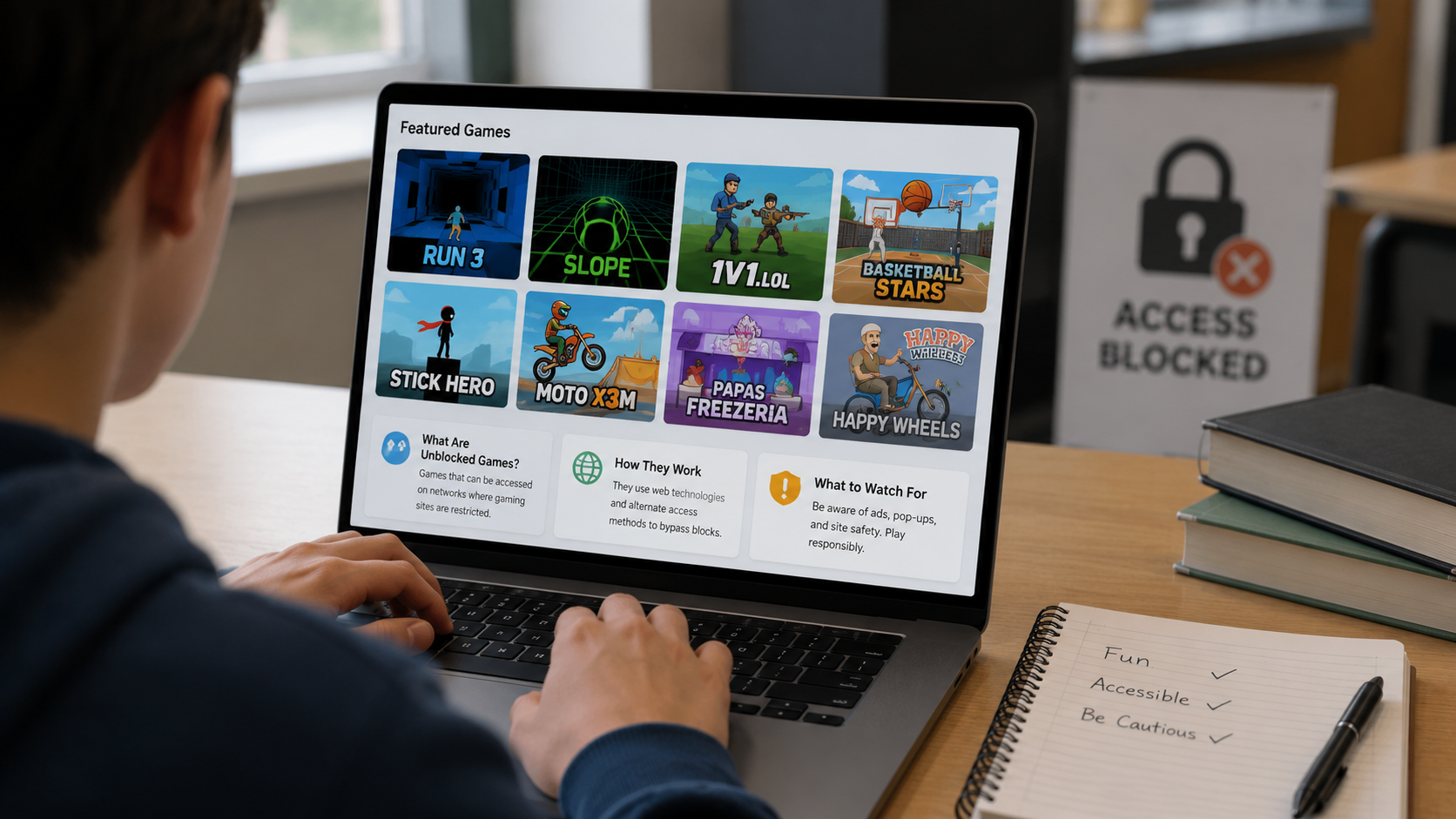
Unblocked games are browser-based games that stay playable on networks where gaming sites are normally restricted, such as school or workplace networks. They typically work through alternate web addresses, proxy connections, or hosting that a network’s content filter hasn’t flagged yet. They aren’t officially approved by the network administrator, and using them usually sits in a gray area between technically possible and against the rules.
What “Unblocked” Actually Means
A network filter doesn’t block “games” as a concept. It blocks specific web addresses, categories of content, or known domains that a filtering service has tagged as gaming, entertainment, or distraction-related. Unblocked games sites exist in the space the filter hasn’t caught up to yet: a new domain, a mirrored copy of a familiar site, or a game embedded inside a page that the filter doesn’t recognize as gaming content.
That’s the core idea worth understanding: “unblocked” describes the filter’s current blind spot, not a special category of game that’s exempt from restrictions. The same game can be blocked on one network and unblocked on another, simply because the filtering software in use is different or hasn’t updated its list yet.
Why Schools and Workplaces Block Games in the First Place
Network filtering on school and office systems usually serves a few overlapping purposes.
Bandwidth management is one. Games, especially ones with video or constant background data use, can slow down a shared network for everyone else using it.
Focus and productivity is another. Schools want students engaged with coursework during class time, and employers have similar reasons for limiting non-work browsing.
Regulatory compliance plays a role too, particularly in the United States. A federal law called the Children’s Internet Protection Act requires schools and libraries that receive certain federal funding to filter internet content as a condition of that funding. Gaming sites often get swept into broader content categories blocked under those filtering policies, even when the games themselves are harmless.
Security is the last major piece. IT departments have legitimate reasons to limit the number of third-party sites students or employees can reach, since every additional site is a potential entry point for malicious ads or scripts.
How Unblocked Games Sites Generally Stay Accessible
Without getting into specific technical instructions, it helps to understand the general categories these sites fall into, since that context explains a lot of the risk involved.
Mirrored or cloned content. Many unblocked games sites simply host copies of the same library of browser games, often the same titles repeated across dozens of differently named sites. When one domain gets added to a filter’s blocklist, a near-identical copy often reappears under a new name shortly after.
Alternate or disguised web addresses. Some sites use domain names or URL structures designed to avoid matching the keyword or category rules a filter is checking against.
Proxy-style access. A smaller number of sites route traffic through an intermediary server, which can make the destination look different to a filter than it actually is.
Lightweight, ad-supported hosting. Because most of these sites don’t charge for access, they’re typically funded through display advertising, which is also where a lot of the safety concerns come from.
None of these methods are sophisticated hacking. They’re closer to a moving target: a constant cycle of new domains appearing as old ones get blocked.
Why It Matters
The reason this topic generates so much search interest isn’t really about the games themselves, which are usually simple browser titles like puzzle games, sports games, or arcade-style classics. It’s about the tension between wanting a short mental break and operating on a network that someone else controls and is responsible for securing.
That tension is worth taking seriously in both directions. A few minutes of a low-stakes game during a free period isn’t inherently harmful, and plenty of students and employees see it as a normal way to decompress. At the same time, the network administrator’s concerns about bandwidth, focus, and security aren’t arbitrary either. Both things can be true at once.
Benefits and Limitations
On the benefit side, short breaks with simple games can offer a quick mental reset, similar to any other short, low-effort distraction. Some students describe it as a way to stay engaged with a shared device during downtime, like a study hall or a lunch period.
The limitations are more significant than they might first appear. These sites have no consistent ownership, oversight, or safety review. A site that was fine last month can change hands, change its ad provider, or get compromised without any visible warning. There’s no equivalent of an app store review process checking what’s actually running on the page.
Risks Worth Knowing About
A few risks come up consistently with this category of site.
Malware and malicious ads. Because most unblocked games sites rely on ad networks with little oversight, they’re a common vector for malicious or deceptive ads, including pop-ups designed to trick users into downloading something unwanted.
Inappropriate ad content. Ad networks on low-quality sites don’t always filter well for age-appropriate content, so ads can occasionally include material that wouldn’t pass through a school’s normal content filter.
Policy violations and consequences. On a school or work-issued device, deliberately working around a content filter is typically a violation of the institution’s acceptable use policy, separate from whether the activity itself is illegal. Consequences can range from a warning to losing device privileges, depending on the institution.
Network security exposure. Routing traffic through unfamiliar proxy servers can expose more data to a third party than users realize, particularly on networks that aren’t using encrypted connections consistently.
Inconsistent reliability. Because these sites get blocked and replaced constantly, there’s no guarantee a given site will still work, or still be the same site, from one week to the next.
Common Mistakes and Misconceptions
A frequent misconception is that “unblocked” means “approved.” It doesn’t. It just means the filter hasn’t caught up yet, which is a temporary and unofficial status, not a sanctioned one.
Another common mistake is assuming a site is safe because it’s popular or has been around for a while. Popularity has no connection to how well a site vets its advertising or hosting, and high-traffic sites are just as often targeted by malicious ad networks as small ones.
Some people also conflate “not illegal” with “allowed.” Playing a browser game generally isn’t a criminal matter, but that’s a separate question from whether it violates a school or employer’s specific rules, which is usually the more relevant issue in practice.
Finally, there’s a tendency to assume all unblocked games sites work the same way. In reality, the category covers everything from simple mirrored game libraries to proxy-based services, and the risk profile differs depending on which type a given site falls into.
Real-World Example
Picture a high school that issues Chromebooks to every student and uses a content filter required under its district’s internet safety policy. A student finishes an assignment early during a study hall and searches for a way to play a quick browser game. The first few results are blocked by the school’s filter, but a few sites further down the list still load.
That student is now in the exact situation this article describes: a working site that hasn’t been flagged yet, no way to know who runs it or how it’s funded, and a school policy that almost certainly classifies this as outside the intended use of a school device, regardless of whether the filter happens to catch it that day.
Key Facts
- Unblocked games are browser games that remain accessible on networks where gaming sites are normally restricted.
- The term describes a gap in a network filter’s coverage, not a special, approved category of game.
- Common methods include mirrored content, alternate domains, and proxy-style routing.
- U.S. schools receiving certain federal funding are required to filter internet content under the Children’s Internet Protection Act, which is part of why gaming sites get blocked in the first place.
- These sites are typically ad-supported, which is the main source of malware and inappropriate-content risk.
- Using them on a school or work device usually violates an acceptable use policy, separate from any question of legality.
Frequently Asked Questions
What are unblocked games?
They’re browser-based games that stay playable on networks with content filters in place, usually because the specific site hasn’t been added to the filter’s blocklist yet.
How do unblocked games sites work?
Most rely on mirrored copies of existing game libraries, alternate domain names, or proxy-style connections that look different to a filter than their actual destination.
Is playing unblocked games safe?
It varies by site, and there’s no consistent way to verify safety in advance. The biggest risks come from ad networks on these sites, which can serve malicious or inappropriate ads with little oversight.
Is it legal to use unblocked games sites?
Playing a browser game isn’t a criminal matter in most circumstances. The more relevant issue is usually a school or employer’s acceptable use policy, which typically prohibits intentionally working around network restrictions, regardless of legality.
What are the alternatives?
Asking a school’s IT department or a workplace administrator to allow specific, vetted sites is one option. Saving gaming time for a personal device on a personal network is another, and it avoids the policy and security concerns tied to institutional devices entirely.
What should someone know before using one of these sites?
The site likely hasn’t been reviewed for safety by anyone, it may disappear or change without notice, and using it on a managed device usually counts as a policy violation even when the content itself is harmless.
Key Takeaways
- Unblocked games sites work by existing in the gaps a content filter hasn’t caught up to yet, not through any special exemption.
- Schools and workplaces block gaming sites for bandwidth, focus, security, and in some cases regulatory reasons.
- The biggest practical risk is exposure to poorly vetted advertising, not the games themselves.
- “Not illegal” and “allowed by policy” are two different questions, and the second one is usually the more relevant one in practice.
- Reliability is inconsistent by design, since these sites are frequently blocked and replaced.
Conclusion
Unblocked games sit at the intersection of a simple desire (a short break during downtime) and a more complicated reality (networks that are filtered for real reasons, accessed through sites with little to no oversight). Understanding how the filtering gap works, and what’s actually funding the site on the other side of it, makes it much easier to weigh whether a quick browser game is worth the trade-offs involved on any given network.
-

 News2 days ago
Was Kash Patel Removed? What the Search Actually Means
-
 Lifestyle1 week ago
Unblocked Games: What They Are, How They Work, and What to Watch For
-
 News2 days ago
Trump Canada Bridge: What’s Going On With the Gordie Howe International Bridge
-

 News14 hours ago
Falconry News: What’s Happening in the World of Hawking Right Now
-
 Lifestyle14 hours ago
Gulf of Oman: Geography, Importance, and Everything You Need to Know
-

 Sports2 weeks ago
UCLA Softball: History, Championships, and What Makes the Program Elite
-

 News2 weeks ago
Delta Upgrade Dance Off at Salt Lake City: The Viral Gate Agent Story Explained
-

 News2 weeks ago
Auburn vs Nevada Prediction: NIT Quarterfinal Breakdown and Final Result