Travel
Costa Brava, Spain: The Complete Guide to Spain’s Rugged Mediterranean Coast

Introduction
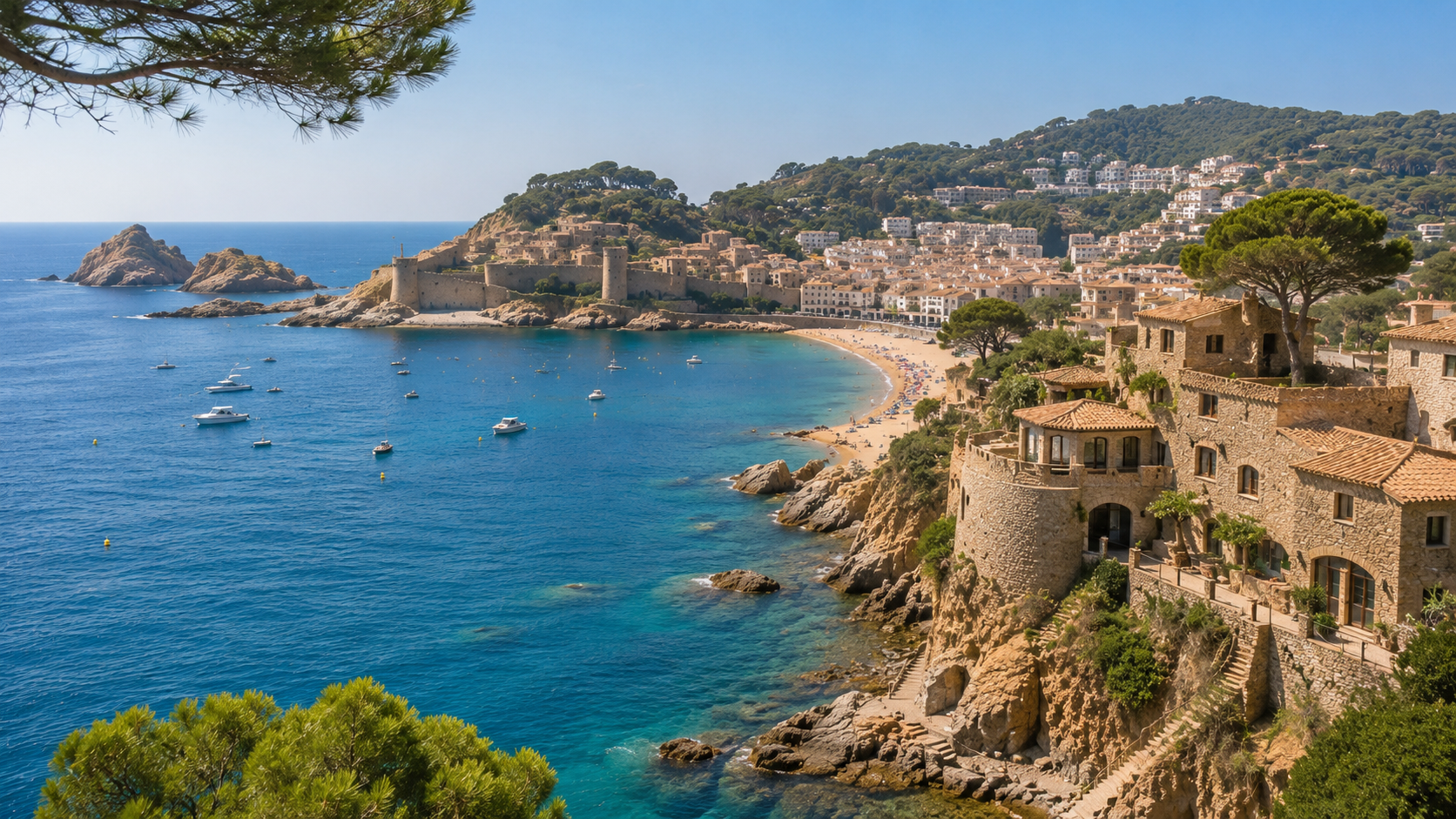
Ask someone who has been there what Costa Brava, Spain, actually feels like, and you’ll rarely hear the same answer twice. Some describe cliffside coves with water so clear you can count the pebbles at the bottom. Others talk about medieval stone villages perched above the sea, or the quiet fishing towns that inspired painters like Salvador Dalí. That variety is exactly why so many people search for this region before they book a trip — Costa Brava isn’t one single experience, it’s a stretch of coastline with dozens of different personalities packed close together.
This guide breaks down what Costa Brava is, where it’s located, what makes it different from Spain’s other coastal regions, and how to plan a visit that matches what you’re actually looking for.
Direct Answer: What Is Costa Brava, Spain?
Costa Brava is a coastal region in northeastern Spain, stretching roughly 220 kilometers along the Mediterranean Sea in Catalonia’s Girona province, from the town of Blanes up to the French border. The name translates to “Rugged Coast,” a reference to its dramatic cliffs, hidden coves, and rocky headlands. Unlike the built-up resort strips found elsewhere in Spain, Costa Brava mixes small fishing villages, medieval old towns, and protected natural areas, making it popular for travelers who want scenery and history alongside beach time.
Where Costa Brava Is Located
Costa Brava sits in the autonomous community of Catalonia, within Girona province, in Spain’s northeast corner. The nearest major city is Girona, and the region is often reached through Barcelona, which lies about an hour south of the southernmost Costa Brava towns. The coastline runs north to the Spanish-French border near Portbou, meaning the northern towns are only a short drive from France.
Because of this geography, Costa Brava has always been a crossroads. Greek and Roman traders passed through here long before it became a tourist destination, and that layered history still shows up in ruins, museums, and old town architecture throughout the region.
Why Costa Brava Became Famous
The name “Costa Brava” was coined in 1908 by a Catalan journalist, Ferran Agulló, who used it to describe the wild, untamed coastline he saw during his travels along the Girona coast. The term stuck because it captured something true: this isn’t a flat, sandy coast — it’s a coast defined by cliffs, pine forests reaching down to the water, and coves you often have to walk or boat to reach.
Tourism developed here more slowly than in some other Spanish coastal areas, and several towns have made deliberate efforts to limit large-scale development. That’s part of why Costa Brava still feels distinct from more built-up resort destinations — many of its beaches remain small, and its town centers have kept their original character.
Key Areas Along Costa Brava
Costa Brava isn’t a single destination — it’s a string of towns, each with a different feel. Understanding these differences matters more here than in most coastal regions, because choosing the wrong base can mean missing what you actually came for.
Northern Costa Brava (Cadaqués to the French Border)
This stretch is the wildest and least developed part of the region. Cadaqués, a whitewashed village where Salvador Dalí lived for decades, sits at the end of a winding mountain road and has resisted large hotel development. Nearby Cap de Creus is a rocky, windswept nature park often described as the point where the Pyrenees meet the sea.
Central Costa Brava (Roses to Palamós)
This area includes larger towns with more infrastructure, such as Roses and Palamós, alongside quieter spots like Begur and its surrounding coves, which are widely considered among the most scenic beaches in the region. This stretch balances accessibility with the natural scenery Costa Brava is known for.
Southern Costa Brava (Tossa de Mar to Blanes)
The southern section includes Tossa de Mar, known for its walled medieval old town overlooking the sea, and Lloret de Mar, which has developed into a larger, livelier resort town with more nightlife and larger hotels than most of the region.
What Makes Costa Brava Different From Other Spanish Coasts
People often compare Costa Brava to Costa del Sol or Costa Blanca, but the differences are significant.
Costa Brava’s coastline is rockier and more vertical, with cliffs and coves replacing the long, flat sandy stretches found further south in Spain. Its towns generally kept a smaller scale, with fewer high-rise hotel developments compared to some other coastal regions. The area is also closer to inland cultural attractions — Girona’s old city and the Dalí Theatre-Museum in Figueres are both within easy reach, giving visitors a mix of beach and culture that’s harder to combine on flatter coastlines.
That said, Costa Brava isn’t uniformly quiet. Towns like Lloret de Mar have a well-established nightlife scene, so the region does include livelier options for travelers who want that.
When to Visit Costa Brava
Spring (April–June): Mild temperatures, fewer crowds, and green landscapes make this a strong option for hiking and sightseeing without peak summer heat.
Summer (July–August): Warmest weather and the busiest season, with the most reliable conditions for swimming. Expect higher prices and fuller beaches, especially in well-known towns.
Autumn (September–October): Sea temperatures stay warm from summer while crowds thin out, often considered a favorite window by repeat visitors.
Winter (November–March): Many coastal restaurants and hotels close for the season, particularly in smaller towns. This is a quieter time better suited to inland exploration than beach visits.
How Costa Brava’s Coastline Was Shaped
The rugged character of Costa Brava comes down to geology. The coastline sits at the eastern edge of the Pyrenees mountain range, where the mountains meet the Mediterranean Sea. Instead of gradually flattening into beaches, in many places the terrain drops sharply into the water, creating the cliffs and rocky outcrops the region is known for. Where rivers and erosion have cut through this terrain over thousands of years, they’ve formed the small sandy coves, known locally as calas, that are scattered along the coast.
This is also why many of Costa Brava’s best beaches aren’t visible from the road. Some require a walk down a cliffside path, and a number can only be reached by boat or on foot along coastal trails.
The Camí de Ronda: Costa Brava’s Coastal Walking Trail
One of the most distinctive features of Costa Brava is the Camí de Ronda, a network of coastal footpaths that originally connected fishing villages and once served as routes for fishermen and, at times, smugglers. Today, sections of this trail have been restored and linked together, allowing visitors to walk between towns and coves along the cliffs rather than driving.
Not every section is continuous or well-marked, and difficulty varies significantly by segment, so it’s worth checking route conditions for the specific stretch you plan to walk rather than assuming the entire trail is uniformly easy.
Common Mistakes Travelers Make in Costa Brava
Assuming every town has a similar vibe. Cadaqués and Lloret de Mar are both technically “Costa Brava,” but they offer very different experiences. Researching the specific town matters more here than in more uniform coastal regions.
Underestimating driving times. The coastal roads are winding and often slow, especially in the north. A distance that looks short on a map can take much longer than expected.
Visiting in peak summer without planning ahead. August is extremely busy, and popular coves can reach capacity. Parking near well-known beaches fills up early in the day during summer months.
Overlooking the inland towns. Girona and Figueres are close enough for day trips but are often skipped entirely by visitors focused only on the coastline, missing a different side of the region’s culture and history.
Expecting long, flat sandy beaches everywhere. Some of Costa Brava’s most talked-about spots are small coves with limited sand, not wide open beaches. Travelers expecting a Costa del Sol-style beach can be surprised by the terrain.
Real-World Example: Planning a Week in Costa Brava
A common approach for a first visit is to split time between two bases rather than one. A traveler might spend three nights in a central town like Begur, using it as a base to explore nearby coves during the day and take a day trip to Girona’s old town. They’d then move north for two nights near Cadaqués to explore Cap de Creus and the quieter northern coastline, before finishing with a night or two in a livelier southern town if they want more nightlife or easier transport connections back to Barcelona.
This kind of split lets visitors experience the contrast between the region’s quieter coves and its more social, developed towns, rather than settling for just one side of what Costa Brava offers.
Key Facts About Costa Brava
- Costa Brava stretches approximately 220 kilometers along Spain’s northeastern Mediterranean coast.
- It’s located in Girona province, within the autonomous community of Catalonia.
- The name means “Rugged Coast” and was first used in print in 1908.
- The region runs from Blanes in the south to the French border in the north.
- Girona city and the Dalí Theatre-Museum in Figueres are both easily reachable inland day trips.
- The coastline includes numerous small coves, or calas, many accessible only by foot or boat.
- The Camí de Ronda coastal trail connects many towns along the shoreline.
- Barcelona is roughly an hour from the southern Costa Brava towns by car.
Frequently Asked Questions
What is Costa Brava known for?
Costa Brava is known for its rugged, cliff-lined coastline, small hidden coves, medieval old towns, and its connections to artists like Salvador Dalí, who lived in Cadaqués for much of his life.
How does Costa Brava differ from Costa del Sol?
Costa Brava has a rockier, more vertical coastline with small coves, while Costa del Sol, in southern Spain, generally features longer, flatter sandy beaches and larger-scale resort development.
Why is it called Costa Brava?
The name was coined in 1908 by journalist Ferran Agulló to describe the wild, rugged character of the Girona coastline, and it has been used ever since.
Is Costa Brava good for families? Many towns along Costa Brava suit families well, with calmer coves and shallow water in certain areas, though some beaches involve walking down cliff paths, which is worth checking in advance if traveling with young children.
What’s the best way to get around Costa Brava?
A car is generally the most practical option, since many coves and smaller towns have limited public transport. Some coastal towns are also connected by boat or the Camí de Ronda walking trail.
Is Costa Brava crowded in summer?
Popular towns and well-known coves can get busy in July and August, particularly around midday. Visiting in spring or early autumn, or arriving early in the day during summer, tends to mean smaller crowds.
Can you visit Costa Brava as a day trip from Barcelona?
The southern towns, such as Tossa de Mar or Lloret de Mar, are close enough for a long day trip from Barcelona, though staying overnight allows more time to explore the coastline properly, especially further north.
Key Takeaways
- Costa Brava is a roughly 220-kilometer stretch of rugged Mediterranean coastline in Catalonia’s Girona province.
- The region includes distinct areas, from the wild, undeveloped north near Cadaqués to the livelier southern towns like Lloret de Mar.
- Its coastline is defined by cliffs and small coves rather than long sandy beaches.
- Girona and Figueres offer inland day trips that pair well with coastal time.
- Visiting outside peak summer months generally means fewer crowds and easier access to popular spots.
- The Camí de Ronda coastal trail is one of the best ways to experience the region’s scenery on foot.
Conclusion
Costa Brava, Spain, rewards travelers who take the time to understand its variety rather than treating it as a single beach destination. Its identity comes from the contrast built into the coastline itself — quiet coves next to lively towns, medieval streets next to modern beach clubs, mountain roads that suddenly open onto the sea. Whether the goal is a quiet coastal walk, a look at the landscapes that shaped Dalí’s work, or simply a swim in clear Mediterranean water, Costa Brava offers a version of the Spanish coast that looks and feels different from what many travelers expect.

-

 Lifestyle3 weeks ago
Unblocked Games: What They Are, How They Work, and What to Watch For
-

 News2 weeks ago
Falconry News: What’s Happening in the World of Hawking Right Now
-

 Lifestyle3 weeks ago
Russia-Ukraine Ceasefire: What’s Been Agreed, What Hasn’t, and Where Talks Stand
-

 News3 weeks ago
Was Kash Patel Removed? What the Search Actually Means
-
 Lifestyle2 weeks ago
Gulf of Oman: Geography, Importance, and Everything You Need to Know
-

 News2 weeks ago
The Hubble Birthday Tradition: How NASA Celebrates the Space Telescope’s Anniversary Every Year
-

 Business3 weeks ago
Hiroshima Pronunciation: How to Say It Correctly in Japanese and English
-

 Business1 week ago
What Is a Bee Buddy? A Complete Guide to Supporting Pollinators at Home