Technology
How to Say Dad in Korean: Every Word, Form, and Context You Need

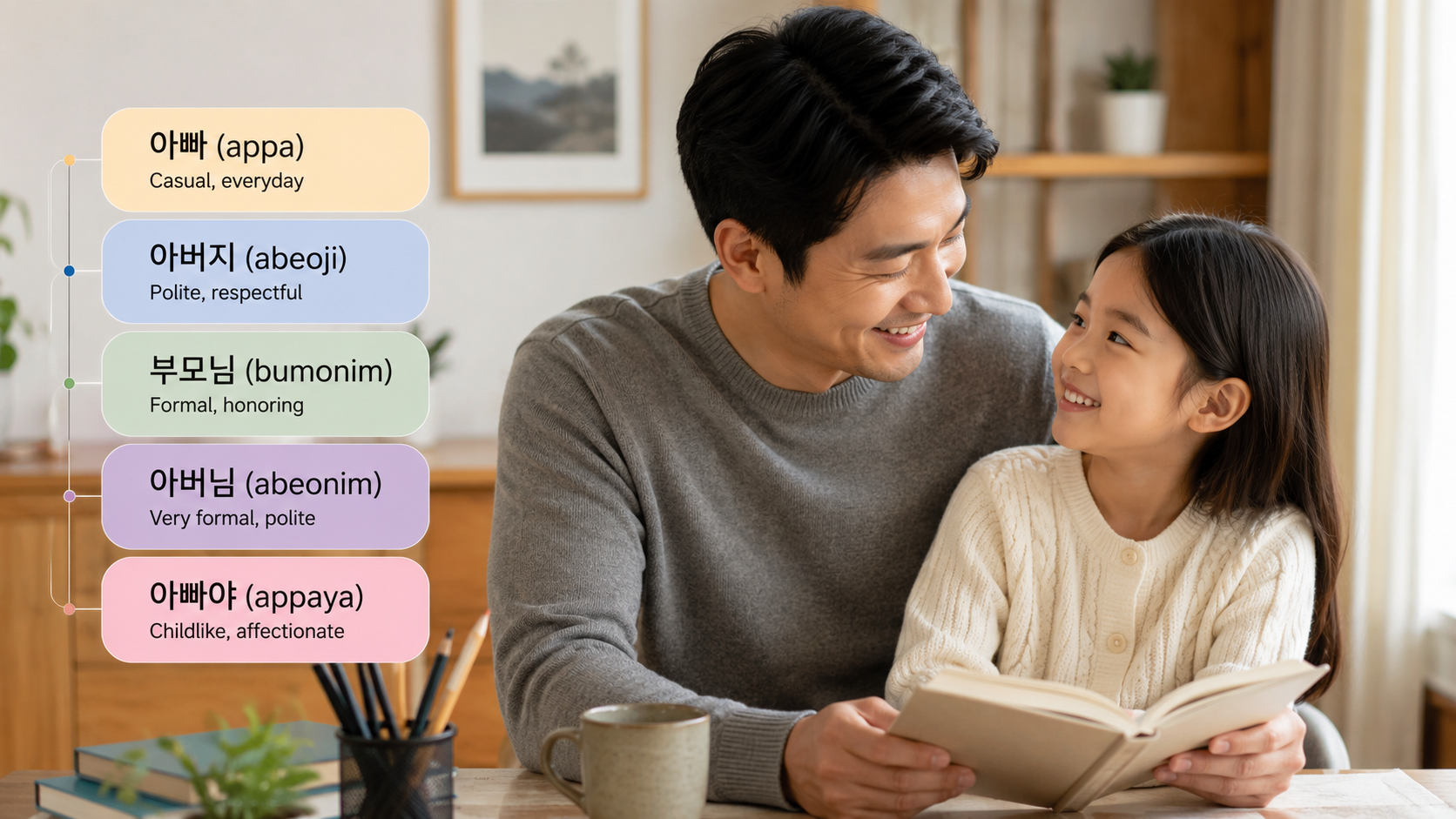
If you’ve ever watched a K-drama, you’ve probably noticed that Korean characters don’t all call their fathers the same thing. Sometimes it’s a warm, quick word. Other times it sounds more formal and deliberate. That’s not a scripting choice — it’s just how Korean works.
Korean has multiple words for father, and which one you use says a lot about the situation you’re in. Learning the difference isn’t complicated once you see the logic behind it. And if you’re studying Korean, dating someone Korean, or simply curious after binge-watching a show, this is genuinely useful stuff to know.
Quick Answer
The two main words for dad in Korean are appa (아빠) and abeoji (아버지). Appa is the casual, affectionate word — the equivalent of “dad” or “daddy” in everyday English. Abeoji is the formal version, used in polite or respectful situations, similar to saying “father” in English. Which one you use depends entirely on context and who you are speaking to.
The Two Main Words for Dad in Korean
Appa — Warm, Casual, Everyday
Appa is the word most Koreans use at home. Children say it, but so do adults — it never really gets outgrown the way “daddy” sometimes does in English. It carries warmth and familiarity, and it sounds exactly as natural as yelling “Dad!” across the house.
You hear appa constantly in Korean homes, in K-dramas, and in casual conversation. The emotional tone is the same as the English word “dad.”
When to use appa:
- Speaking directly to your own father in a relaxed setting
- Talking about your dad to friends
- Any informal, family-style conversation
Abeoji — Formal and Respectful
Abeoji is the more formal word. Think of it as the difference between calling someone “Dad” versus “Father” in English. Same person, different register.
You would use abeoji in a speech, when introducing your father to someone important, or when speaking to elders about your family. It sounds more deliberate and carries a tone of respect.
When to use abeoji:
- Formal conversations or written Korean
- Talking about your father to someone older or in a professional setting
- Situations where casual language would feel out of place
Other Korean Words Related to Father
Abeonim — The Honorific Form
Abeonim (아버님) is a step above abeoji in terms of politeness. It is the word you would use when referring to someone else’s father respectfully, or when speaking to your father-in-law directly.
If your Korean friend mentions their dad, referring to him as abeonim shows you are being thoughtful and respectful about their family. It is also the standard word for a father-in-law in most situations.
Buchin — Formal Written Term
Buchin (부친) is a Sino-Korean word for father that comes from Chinese characters. You will not hear it much in everyday conversation, but you might see it in a newspaper article, formal document, or official writing.
It is worth recognizing if you read Korean news or literature, but you do not need it for daily speech.
Why Korean Has Multiple Words for the Same Person
Korean has a built-in system of formality levels. The language adjusts vocabulary, verb endings, and expressions based on the relationship between speakers and the social setting. This applies to family words too.
Appa and abeoji are not two different people — they are two different ways of talking about the same person depending on who you are speaking to and how formal the moment is. A Korean person will switch between these naturally without even thinking about it, the same way English speakers shift between casual and professional language without consciously deciding to.
This matters if you are learning Korean. Using appa in a formal situation can come across as too casual or even disrespectful. Using abeoji at home with your own family sounds stiff and emotionally distant. Getting the right word for the right moment is part of speaking Korean naturally.
The “Our Dad” Habit — Uri Appa
Something that surprises many Korean learners is that Koreans often say uri appa rather than nae appa when talking about their own father.
Uri means “our.” Nae means “my.” So technically, Koreans say “our dad” instead of “my dad.”
This is not a mistake. It reflects a cultural tendency in Korean to think of family and close relationships as shared rather than individually owned. The same pattern shows up with other words — Koreans say “our mom,” “our country,” and even “our house” when referring to their own personal things.
Using “my dad” is not wrong, but “our dad” sounds more natural and is far more common in everyday Korean speech.
Using the Right Word in Different Situations
Here is how this plays out in real life:
At home, talking to your father directly:
Appa is the natural choice. Most Korean adults still call their father appa in relaxed family settings. It is affectionate and completely normal at any age.
Talking about your dad with close friends:
Appa still works fine here. You might say something like “my dad cooks really well” using appa casually.
Talking about your dad to someone older or in a formal setting:
Switch to abeoji. Showing that awareness signals good manners and social intelligence in Korean culture.
Referring to someone else’s father:
Use abeonim. It shows respect for the other person’s family.
Meeting or addressing your father-in-law:
Abeonim is the standard and safest choice. It is respectful without being overly stiff.
Pronunciation Notes
Korean has its own alphabet called Hangul, which is phonetically consistent once you learn it. The romanizations used here (appa, abeoji, abeonim) give a rough idea of how the words sound, but they are not perfect.
One important note: the “pp” in appa represents a tense consonant in Korean. It sounds sharper and more clipped than a regular English “p.” If you say it with a soft English “p,” it can sound like a different word. Listening to native speakers is the best way to get this right.
Abeoji has three syllables: ah-beo-ji. The middle syllable is soft, almost like the “bu” sound in “but” said gently.
Common Mistakes to Avoid
Using appa in formal situations:
This is the most common error for learners. If you are meeting your partner’s Korean parents and refer to the father as appa, it can come across as too familiar. Abeoji or abeonim is the right call in that context.
Ignoring the tense consonant in appa:
The pronunciation matters more than learners often expect. The sharp “pp” sound is a real feature of Korean, not just a spelling choice.
Sticking to one word for every situation:
Real Korean speakers shift between appa and abeoji depending on context. Learning both and knowing when each one fits is part of sounding natural.
Assuming formality rules are rigid:
Korean is changing, especially among younger generations in cities. Some people use appa more loosely than traditional rules would suggest. The guidelines here are useful defaults, not absolute laws.
What These Words Reveal About Korean Culture
Language and culture are closely connected, and the Korean words for dad are a good example of that.
Korean society has traditionally valued family hierarchy and respect for elders, influenced heavily by Confucian ideas. That is part of why the language has formal and informal versions of family words in the first place. The structure of the vocabulary reflects the structure of social relationships.
The word abeoji, with its formal distance, reflects the historically more authoritative image of the Korean father. The word appa, warmer and softer, reflects how that image has shifted over generations. Korean fathers today — especially in urban areas — tend to be more emotionally present and expressive than previous generations.
K-dramas use this vocabulary intentionally. When an adult character switches from calling their father appa to abeoji, it often signals emotional tension or distance. Switching back can mark a moment of connection or forgiveness. The words do emotional and narrative work without any extra explanation needed.
Key Facts About Dad in Korean
- Appa is the informal, everyday word for dad — used in casual family settings at any age
- Abeoji is the formal version — used in polite conversation, formal writing, and respectful contexts
- Abeonim is the honorific form — used for someone else’s father or a father-in-law
- Buchin is a formal written term found in documents and news, not everyday speech
- Koreans typically say “our dad” rather than “my dad” because of cultural collectivism
- Context and audience determine which word is correct — there is no single answer for all situations
- Korean speech levels affect vocabulary choices across the entire language, not just family terms
Frequently Asked Questions
What is the most common way to say dad in Korean?
Appa is the most common word in everyday speech. It is warm, casual, and used by people of all ages when speaking to or about their own father in informal settings.
When should I use abeoji instead of appa?
Use abeoji in formal or polite situations — when speaking to elders, in professional contexts, or when you want to show a higher level of respect. It is also the safer choice when you are unsure which level of formality is appropriate.
How do I address my Korean father-in-law?
Abeonim is the standard and most respectful option. It is the honorific form of abeoji and shows the appropriate level of deference for that relationship.
Is it strange for an adult to call their father appa?
Not at all. Many Korean adults use appa with their fathers throughout their entire lives. In casual family settings, it is completely natural and expected.
Why do Koreans say “our dad” instead of “my dad”?
The phrase uri appa, which literally means “our dad,” reflects a Korean cultural tendency to frame close relationships and family as shared rather than individually owned. It is a deeply ingrained linguistic habit.
Are there other formal words for father in Korean?
Yes. Buchin is a formal, literary term derived from Chinese characters. You will see it in newspapers and official writing but rarely hear it in conversation.
Key Takeaways
- The two main words for dad in Korean are appa (casual) and abeoji (formal)
- Appa is the warm, everyday word used in family settings — equivalent to “dad” in English
- Abeoji carries more formality — equivalent to “father” in English
- Abeonim is the honorific form used for someone else’s father or a father-in-law
- Koreans say “our dad” rather than “my dad” as a reflection of collectivist cultural values
- The correct word depends on your audience and the level of formality the situation calls for
- Pronunciation matters — the sharp consonant in appa is a real feature of Korean phonology
Learning how to say dad in Korean is a small thing on the surface, but it opens up something bigger. Once you understand why Korean has different words for the same family member, you start to see how the whole language is built around relationships and social awareness. That is what makes Korean more than just vocabulary — it is a way of thinking about how people connect with each other.

-

 Lifestyle3 weeks ago
Unblocked Games: What They Are, How They Work, and What to Watch For
-

 News3 weeks ago
Was Kash Patel Removed? What the Search Actually Means
-

 News2 weeks ago
Falconry News: What’s Happening in the World of Hawking Right Now
-

 Lifestyle3 weeks ago
Russia-Ukraine Ceasefire: What’s Been Agreed, What Hasn’t, and Where Talks Stand
-

 Lifestyle2 weeks ago
Gulf of Oman: Geography, Importance, and Everything You Need to Know
-

 News2 weeks ago
The Hubble Birthday Tradition: How NASA Celebrates the Space Telescope’s Anniversary Every Year
-

 Health2 weeks ago
JD Vance Trump Health: What the Public Record Actually Shows
-

 Business1 week ago
What Is a Bee Buddy? A Complete Guide to Supporting Pollinators at Home