
Business
Hiroshima Pronunciation: How to Say It Correctly in Japanese and English

Introduction
Hiroshima comes up often in history classes, news coverage, and conversations about Japan, but a lot of people aren’t sure they’re saying it right. Some learned it from a textbook, some from a documentary narrator, and some just guessed based on how it’s spelled. Because the word gets mispronounced so often in English, even by people speaking on television, it’s worth taking a few minutes to get it right, especially given how much weight this place name carries in modern history.
This guide breaks down exactly how to pronounce Hiroshima pronunciation, both the way native Japanese speakers say it and the way it’s commonly adapted into English, along with where most pronunciation mistakes come from.
Direct Answer
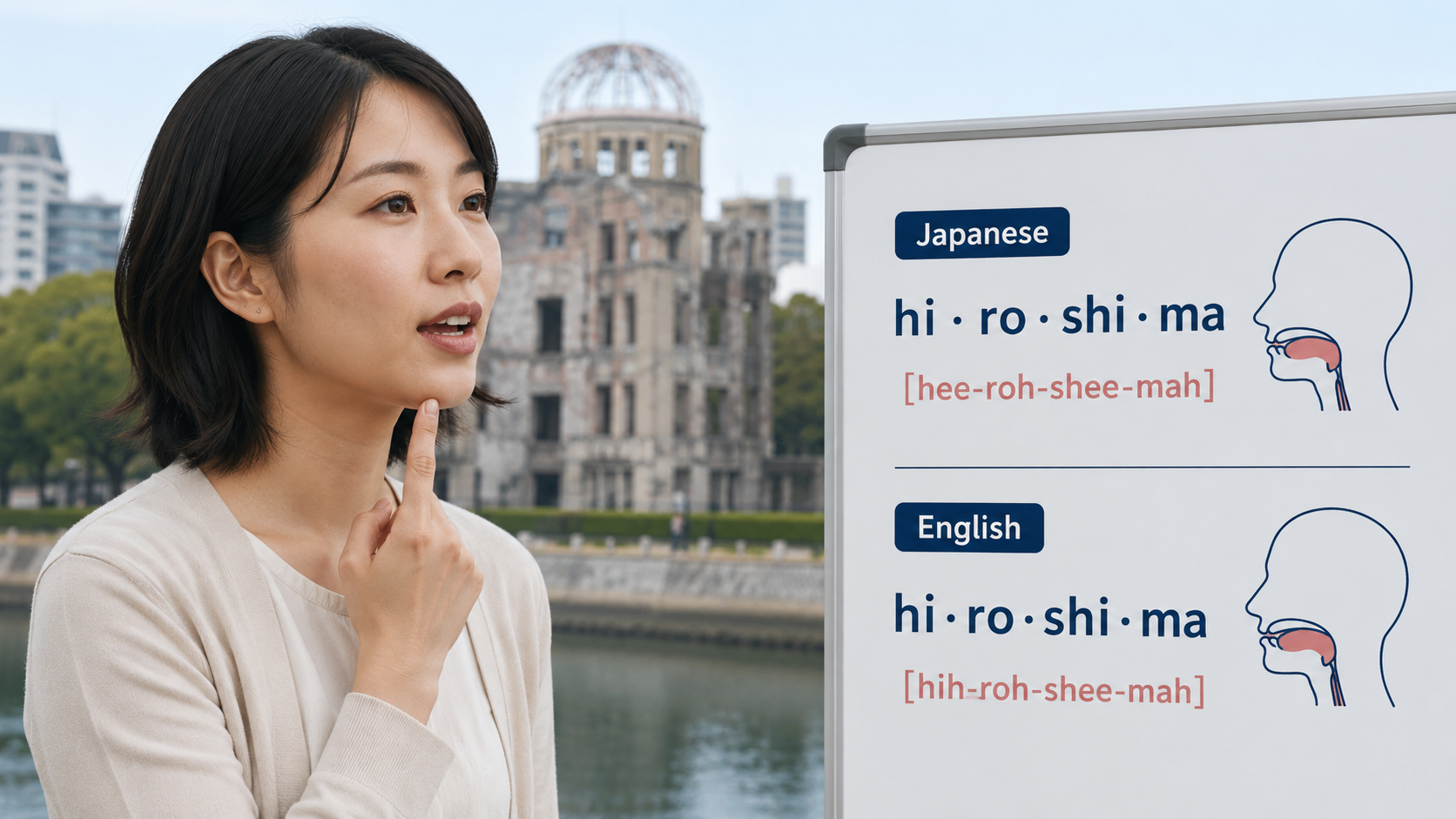
Hiroshima is pronounced “hee-roh-SHEE-mah” in Japanese, with four even, short syllables: hi-ro-shi-ma. In English, it’s most commonly said as “huh-ROH-shih-muh” or “HEER-oh-SHEE-muh,” with stress shifted onto the second syllable. Neither version is “wrong” exactly, but the Japanese pronunciation keeps each syllable short and evenly weighted, while English versions tend to stretch and stress certain syllables differently.
How Hiroshima Is Pronounced in Japanese
Syllable Breakdown
Japanese is a mora-timed language, which means each syllable, or mora, generally gets roughly equal length and emphasis, unlike English, which leans heavily on stressed and unstressed syllables. Hiroshima breaks into four morae:
- Hi (as in “hit,” but with a softer “h”)
- Ro (as in “roe”)
- Shi (as in “she”)
- Ma (as in “mah”)
Put together, it sounds close to “hee-ro-shee-ma,” said at a fairly even pace, without strongly punching any single syllable.
Pitch Accent
Japanese uses pitch accent rather than stress accent. In standard Japanese, Hiroshima pronunciation typically follows a flat-to-falling pitch pattern, where the pitch doesn’t dramatically rise and fall the way English stress does. This is part of why the word sounds noticeably different from most English pronunciations, even when the vowels are technically right.
IPA Transcription
For readers familiar with the International Phonetic Alphabet, the Japanese pronunciation is roughly written as /hiɾoɕima/. The “ɕ” symbol represents a sound similar to the English “sh,” but produced slightly further forward in the mouth.
How Hiroshima Is Pronounced in English
English speakers usually adapt the word to fit English stress patterns, which means picking one syllable to emphasize more than the others.
Common English Pronunciation
The most widely used English pronunciation places stress on the second syllable: “huh-ROH-shih-muh” (IPA: /hɪˈroʊʃɪmə/ or /hɪˈroʊʃəmə/). This version is common in American and British broadcast media.
A Common Alternative
Some speakers instead stress the third syllable, saying something closer to “HEER-oh-SHEE-muh,” with a long “ee” sound on both the first and third syllables. This version is also widely heard and isn’t considered incorrect, just a different anglicized version of the same word.
Why English Versions Vary
English doesn’t have a single, standardized way of adapting Japanese pronunciation, so different newscasters, teachers, and public figures have popularized slightly different versions over the decades. Neither major English variant matches the Japanese original exactly, since English speakers naturally apply English stress patterns to foreign words.
Common Mistakes People Make
Mistake: Adding an extra syllable. Some English speakers accidentally pronounce it as five syllables instead of four, inserting an extra vowel sound that doesn’t exist in the Japanese original.
Mistake: Over-stressing the first syllable. Saying “HIRO-shima” with heavy emphasis on “HI” is a common error, often influenced by the unrelated word “hero,” which sounds similar but isn’t connected to the name at all.
Mistake: Flattening the “shi” sound into “shee” too aggressively or too softly. The “shi” syllable should sound clearly like “she,” not “shy” or a soft “zh” sound.
Mistake: Assuming there’s only one “correct” English pronunciation. Both major anglicized versions are widely accepted; there isn’t a single official English pronunciation enforced by dictionaries or media style guides.
Mistake: Confusing it with similarly spelled place names. Hiroshima pronunciation is sometimes mixed up with Fukushima, another Japanese city name that gained international attention after the 2011 nuclear disaster. The two names share a similar rhythm but are entirely different places with different histories.
Step-by-Step: How to Practice Saying It
- Break it into four parts. Say “hi,” then “ro,” then “shi,” then “ma” slowly and separately.
- Keep each syllable short. Avoid stretching any single syllable longer than the others if you’re aiming for the Japanese pronunciation.
- Speed it up gradually. Once each syllable feels comfortable, start saying them together at a natural speaking pace: “hi-ro-shi-ma.”
- Compare to a native audio source. Listening to a Japanese news broadcast or language-learning audio clip that includes the word can help calibrate your ear, since written guides only go so far.
- Decide which version fits your context. If you’re speaking Japanese or want to closely match native pronunciation, use the four-syllable, evenly weighted version. If you’re speaking English and want to sound natural to an English-speaking audience, the anglicized stress pattern is generally expected and understood.
Why Pronunciation of This Word Matters
Hiroshima is the name of a real city in Japan with roughly 1.2 million residents today. It’s also the site of the first use of a nuclear weapon in warfare, on August 6, 1945, an event that remains a significant part of 20th-century history and a place of memorial and reflection in Japan. Because the name carries that historical weight, getting the pronunciation reasonably close, even if not perfectly native, is often seen as a small but meaningful sign of respect when discussing the city, its history, or its people.
This is also a city with an active, modern identity beyond its historical association. Hiroshima today is known for its food culture, including a distinct style of okonomiyaki (a savory layered pancake dish), as well as its rebuilt downtown, the Hiroshima Peace Memorial Park, and nearby attractions like Miyajima Island.
Real-World Examples
Example 1: A news anchor reporting on a historical anniversary commemoration in Hiroshima typically uses the “huh-ROH-shih-muh” pronunciation, the most common version heard in American broadcast English.
Example 2: A student studying Japanese in a language class learns to say “hi-ro-shi-ma” with even, short syllables, matching how a native speaker would say it in conversation.
Example 3: A traveler planning a trip to Japan practices the Japanese-style pronunciation before the trip, since locals are likely to understand and appreciate the more accurate version, even if the traveler’s accent isn’t perfect.
Key Facts
- Hiroshima has four syllables in Japanese: hi-ro-shi-ma.
- Japanese pronunciation gives each syllable roughly equal length and weight.
- Common English pronunciations stress either the second or third syllable.
- The IPA transcription for the Japanese pronunciation is approximately /hiɾoɕima/.
- Hiroshima is a real, present-day Japanese city with over a million residents.
- The name is sometimes confused with Fukushima, a separate Japanese city.
FAQ
How do you pronounce Hiroshima correctly?
In Japanese, it’s said as four short, even syllables: hi-ro-shi-ma. In English, the most common version stresses the second syllable, sounding like “huh-ROH-shih-muh.”
Is there one official English pronunciation?
No. English speakers use a couple of slightly different anglicized versions, and no single one is officially mandated by dictionaries or style guides.
Why does Hiroshima sound different in Japanese versus English?
Japanese uses even-length syllables and pitch accent, while English relies on stressed and unstressed syllables. When English speakers say the word, they naturally apply English stress patterns instead of the original Japanese rhythm.
Is it disrespectful to mispronounce Hiroshima?
Most native Japanese speakers don’t expect non-native speakers to perfectly replicate Japanese pronunciation. Making a reasonable effort is generally appreciated, especially in formal or historical contexts.
What’s the difference between Hiroshima and Fukushima?
They’re two separate Japanese cities. Hiroshima is in western Japan and is associated with the 1945 atomic bombing. Fukushima is in eastern Japan and is associated with the 2011 nuclear power plant disaster following an earthquake and tsunami. Their names sound similar but refer to entirely different places and events.
Where can I hear the correct pronunciation?
Japanese news broadcasts, language-learning apps with native audio, and travel or documentary content filmed in Japan are reliable ways to hear the native pronunciation spoken naturally.
Key Takeaways
- Hiroshima has four short, evenly weighted syllables in Japanese: hi-ro-shi-ma.
- English speakers commonly stress either the second or third syllable instead.
- Neither major English pronunciation is officially “correct” over the other; both are widely understood.
- Common mistakes include adding extra syllables or over-stressing the first syllable like the word “hero.”
- Hiroshima is a real, modern Japanese city, not just a historical reference point.
Conclusion
Getting Hiroshima pronunciation right comes down to understanding two different systems: the short, even syllables of Japanese and the stress-based rhythm of English. Neither version is something to stress over perfecting, but knowing the difference helps explain why the word sounds different depending on who’s saying it, and gives you a clearer, more confident way to say it yourself.

Introduction
Jodean Bottom is a relatively private member of the family that became famous through River Phoenix, Joaquin Phoenix, Rain Phoenix, Liberty Phoenix, and Summer Phoenix. Unlike those siblings, Jodean did not establish a widely documented career in Hollywood. Her name mainly appears in connection with the Phoenix family tree, particularly because she is widely identified as their older paternal half-sister.
That family connection makes Jodean Bottom an interesting subject for people researching the background of the Phoenix family. At the same time, it creates a problem for anyone looking for a conventional celebrity biography: reliable public information about Jodean herself is limited.
Several online biographies report that Jodean was born on February 29, 1964, in Amadora, Portugal, and identify her father as John Lee Bottom. Her mother is commonly reported as a woman named Trinity. However, these personal details are not documented through the same strong public sources available for her famous siblings, so they should be treated as reported information rather than unquestionable fact.
What is much clearer is her place in the family. River Phoenix’s biographical record identifies Jodean as his paternal half-sister, while John Lee Bottom and Arlyn Phoenix were the parents of River, Rain, Joaquin, Liberty, and Summer.
Direct Answer: Who Is Jodean Bottom?
Jodean Bottom is widely identified as the older paternal half-sister of River Phoenix, Joaquin Phoenix, Rain Phoenix, Liberty Phoenix, and Summer Phoenix. Her father was John Lee Bottom, who later had five children with Arlyn “Heart” Phoenix. Unlike her famous half-siblings, Jodean has lived largely outside the entertainment industry and has maintained a private life. Her reported birth date is February 29, 1964, although detailed public documentation about her early life is limited.
Who Are Jodean Bottom’s Parents?
The most consistently reported part of Jodean’s parentage is her connection to John Lee Bottom, the father of the five children who later became known professionally as the Phoenix siblings.
John Lee Bottom later married Arlyn Dunetz, who became known publicly as Arlyn “Heart” Phoenix. The couple had five children: River, Rain, Joaquin, Liberty, and Summer. People also identifies John as originally being known as John Lee Bottom and describes his marriage and family with Arlyn.
Jodean was born before John and Arlyn established that family. This explains an important distinction: she is a paternal half-sister, not one of the five children born to John and Arlyn.
Who Was Jodean Bottom’s Mother?
Jodean’s mother is commonly identified by secondary sources as Trinity. However, considerably less reliable public information is available about Trinity than about John Lee Bottom or Arlyn Phoenix.
Some biography websites present details about Trinity as established facts, but those details are not supported by the same level of documentation found in mainstream biographies of the Phoenix family. A careful account should therefore identify Trinity as the reported mother rather than presenting every online claim about her life as verified.
This distinction matters because Jodean herself has not maintained the type of public profile that would allow researchers to independently confirm many details about her childhood.
When Was Jodean Bottom Born?
Several secondary biographies report that Jodean Bottom was born on February 29, 1964, in Amadora, Portugal. If that date is correct, she is 62 years old in 2026.
The February 29 date is particularly noticeable because it is a leap-day birthday. However, the exact birth information should be treated with some caution. The available public sources repeat the date frequently, but there is limited primary documentation publicly available that independently establishes all of these details.
Some sources also contain inconsistent spellings of the reported birthplace. Amadora is the location most commonly given.
For that reason, the most responsible wording is that Jodean Bottom was widely reported to have been born in 1964, with February 29 and Amadora, Portugal, frequently listed in secondary biographies.
Jodean Bottom and the Phoenix Family
Understanding the family relationship makes Jodean’s story much easier to follow.
John Lee Bottom later became the father of five children with Arlyn Phoenix:
- River Phoenix
- Rain Phoenix
- Joaquin Phoenix
- Liberty Phoenix
- Summer Phoenix
Jodean shares their father but not their mother. She is therefore their paternal half-sister.
River Phoenix’s biographical record specifically lists Jodean as a paternal half-sister alongside his four younger siblings.
This also explains why people sometimes become confused when looking at the Phoenix family tree. Jodean is part of the broader Bottom-Phoenix family but did not grow up as one of the five children raised by John and Arlyn.
Phoenix Family Tree
A simplified family structure looks like this:
John Lee Bottom + Trinity
→ Jodean Bottom
John Lee Bottom + Arlyn “Heart” Phoenix
→ River Phoenix
→ Rain Phoenix
→ Joaquin Phoenix
→ Liberty Phoenix
→ Summer Phoenix
This makes Jodean the older paternal half-sister of all five Phoenix siblings.
Why Is She Called Jodean Bottom Instead of Jodean Phoenix?
The different surnames are another common source of confusion.
Jodean was born as Jodean Bottom, before her father established the family that later became publicly associated with the Phoenix surname.
John and Arlyn’s children were originally also born with the Bottom surname. River, for example, was born River Jude Bottom. The family later adopted the Phoenix name, and the children became known publicly as the Phoenix siblings.
Jodean retained the Bottom surname in public records and biographies.
Therefore, searching for “Jodean Phoenix” may produce fewer useful results than searching for Jodean Bottom.
Jodean Bottom’s Relationship With River Phoenix
Jodean’s connection to River Phoenix is one of the most frequently discussed parts of her story.
Secondary accounts have reported that River learned about his older half-sister and eventually helped reconnect her with the family. Some versions of the story describe River and members of the family searching for Jodean and eventually meeting her.
The story has been repeated across biography sites and fan-oriented sources.
However, the details require caution.
There is a difference between establishing that Jodean was River’s paternal half-sister and proving every detail of the reported reunion story. The family relationship is supported by biographical records, while the more detailed accounts of how River located her and exactly what happened afterward rely heavily on secondary or fan-based sources.
A trustworthy biography should therefore avoid turning an often-repeated family story into a fully documented historical event without stronger evidence.
Did River Phoenix Know About Jodean?
Available secondary accounts suggest that River eventually learned about Jodean and became interested in reconnecting with his older half-sister.
Some reports describe River as having a close or caring relationship with her after the reunion.
Those claims are plausible within the broader family narrative, but there is not enough reliable public documentation to reconstruct their private relationship in detail. It is better to say that reports describe a later family connection than to invent conversations, dates, or private experiences that have not been independently documented.
Did Jodean Bottom Grow Up With River and Joaquin Phoenix?
Probably not in the same household, according to the available biographical accounts.
Jodean was born before John Lee Bottom and Arlyn Dunetz created the family that later included River, Rain, Joaquin, Liberty, and Summer. Secondary biographies generally describe Jodean as having lived separately from her younger half-siblings during their childhood.
This distinction is important because the Phoenix children had a highly unusual upbringing involving frequent travel and their parents’ involvement with the Children of God religious movement during the 1970s.
It would be misleading to automatically assume that Jodean experienced the same childhood.
There is simply not enough reliable information about her early years to make that claim.
John Lee Bottom and the Phoenix Family
To understand why Jodean is connected to such a famous family, it helps to understand her father’s later life.
John Lee Bottom met Arlyn Dunetz in California in the late 1960s. The couple married and eventually had five children. During the 1970s, the family became involved with the Children of God movement and traveled through several countries. They later left the organization.
Their children went on to develop careers in entertainment and other creative fields.
River became a major young actor before his death in 1993. Joaquin eventually became an internationally recognized actor, while Rain, Liberty, and Summer also pursued creative careers.
Jodean’s life followed a very different path.
Who Are Jodean Bottom’s Half-Siblings?
Jodean is widely reported as the paternal half-sister of five members of the Phoenix family.
River Phoenix
River Phoenix was born in 1970 and became one of the most respected young actors of his generation. His film work included Stand by Me, Running on Empty, My Own Private Idaho, and The Mosquito Coast.
He was also a musician and performed with Aleka’s Attic.
River died in 1993 at age 23. His early death contributed significantly to the continuing public interest in his family and personal history.
Rain Phoenix
Rain Phoenix was born in 1972 and developed a career in music and acting. She is known for her musical work as well as her connection to the Phoenix family’s artistic history.
Joaquin Phoenix
Joaquin Phoenix, born in 1974, became one of the most prominent actors in the family. His career includes films such as Gladiator, Walk the Line, The Master, Her, and Joker.
His international fame is one of the main reasons people search for information about Jodean Bottom.
Liberty Phoenix
Liberty Phoenix was born in 1976. She has had connections to acting and creative work but has generally maintained a lower public profile than River or Joaquin.
Summer Phoenix
Summer Phoenix, born in 1978, became an actress and musician. She is the youngest of the five children born to John Lee Bottom and Arlyn Phoenix.
Together, these five siblings are the group most people recognize when they hear the name “Phoenix family.”
What Does Jodean Bottom Do for a Living?
Jodean Bottom’s profession is not reliably established in the public record.
Unlike River and Joaquin Phoenix, she does not have a well-documented filmography or a major entertainment career. There is no strong evidence that she became a professional Hollywood actress, musician, or producer.
Some online biographies make claims about her education, employment, interests, or previous activities, but these claims often lack strong supporting documentation.
The safest conclusion is simple: Jodean Bottom has lived largely outside the public entertainment industry, and her current profession is not publicly established.
That lack of information should not be interpreted negatively. It simply reflects her decision, or circumstances, to remain outside the celebrity spotlight.
Does Jodean Bottom Have Children?
Some secondary sources report that Jodean has children and identify at least one daughter by the name Victory. Other accounts refer more generally to daughters.
However, the available reports do not agree completely about the number of children or provide enough reliable primary documentation to establish a complete family profile.
Therefore, it is better to describe Jodean as reported to have children rather than presenting a precise number as a confirmed fact.
Her children’s privacy should also be respected, particularly because they are not public figures simply because of their relationship to the Phoenix family.
Is Jodean Bottom Married?
Jodean Bottom’s current marital or relationship status is not reliably documented.
Some biography websites label her as single, while others describe her relationship status as undisclosed. These conflicting claims show why online celebrity-profile information should not automatically be treated as verified.
There is no need to manufacture a relationship history where reliable evidence is unavailable.
What Is Jodean Bottom’s Net Worth?
There is no reliable public figure for Jodean Bottom’s net worth.
Online celebrity websites sometimes publish estimated net worth numbers for people who have no documented public financial profile. Such estimates are often based on speculation rather than verified income, assets, investments, or business records.
Jodean has not built a public entertainment career comparable to Joaquin Phoenix, so there is no sound basis for assigning her a specific celebrity-style net worth.
The responsible answer is that her personal wealth is not publicly known.
Why Is Jodean Bottom So Private?
Jodean’s privacy is one of the defining characteristics of her public identity.
River and Joaquin Phoenix became internationally famous because of their careers. Jodean did not follow the same path. As a result, newspapers, entertainment databases, interviews, and biographies have produced far less information about her.
This creates an unusual situation: people know who she is mainly because of her relationship to famous relatives, rather than because of a career or public achievements of her own.
That is also why information about her can be difficult to verify.
A person who spends decades outside the media naturally leaves a smaller public record than an actor who gives interviews, attends premieres, appears on television, and maintains a professional filmography.
Common Misconceptions About Jodean Bottom
Myth 1: Jodean Is Joaquin Phoenix’s Full Sister
She is generally identified as Joaquin Phoenix’s paternal half-sister. They share the same father, John Lee Bottom, but have different mothers.
Myth 2: Jodean Was Raised With All the Phoenix Children
Available accounts suggest that Jodean’s childhood was separate from the household that John Lee Bottom and Arlyn Phoenix created for their five children.
However, the details of her early upbringing remain poorly documented.
Myth 3: Jodean Was a Hollywood Actress
There is no strong public record showing that Jodean built a professional acting career comparable to her siblings.
Her fame comes primarily from her family connection.
Myth 4: Every Detail on Biography Websites Is Confirmed
This is perhaps the biggest misconception.
Many websites repeat the same details about Jodean’s birth date, birthplace, mother, children, and personal life. Repetition does not automatically make information independently verified.
When several sites copy the same biography, they may all be relying on the same original claim.
Myth 5: Her Net Worth Can Be Calculated From Joaquin Phoenix’s Wealth
It cannot.
Jodean’s finances are separate from those of her famous half-siblings. There is no reliable public evidence establishing her income or assets.
How to Research Jodean Bottom’s Biography Accurately
Because the available information is limited, researching Jodean requires more care than researching a major Hollywood celebrity.
Step 1: Establish the Family Relationship
Start with well-documented biographies of River Phoenix, Joaquin Phoenix, and their parents.
This establishes the relationship between John Lee Bottom and the five Phoenix siblings.
Step 2: Separate Confirmed Information From Reported Details
For Jodean herself, label details according to their evidence.
For example:
- Well-supported: She is identified as River Phoenix’s paternal half-sister.
- Widely reported: Her birth date is February 29, 1964.
- Widely reported but less independently documented: Her birthplace is Amadora, Portugal.
- Less certain: Specific details about her mother, children, occupation, or private relationships.
Step 3: Check Multiple Independent Sources
If several websites repeat exactly the same sentence, that does not necessarily mean they independently confirmed it.
Look for original interviews, reputable biographies, archival records, or established publications.
Step 4: Avoid Filling Gaps With Speculation
A missing fact is not an invitation to guess.
This is particularly important when writing about a private person.
Real-World Example: Why the Phoenix Family Tree Can Be Confusing
Imagine someone searches for “Joaquin Phoenix siblings.”
Many sources list River, Rain, Liberty, and Summer. That is because those four are Joaquin’s siblings within the immediate family formed by John and Arlyn.
Then another source mentions Jodean.
At first, the information can appear contradictory.
It is not necessarily contradictory. The difference is that Jodean is a paternal half-sibling, while River, Rain, Joaquin, Liberty, and Summer are the five children John Lee Bottom had with Arlyn Phoenix.
The family tree becomes clearer once the two family branches are separated.
Key Facts About Jodean Bottom
- Name: Jodean Bottom
- Family connection: Older paternal half-sister of River, Rain, Joaquin, Liberty, and Summer Phoenix
- Father: John Lee Bottom
- Reported mother: Trinity
- Reported birth date: February 29, 1964
- Reported birthplace: Amadora, Portugal
- Reported age in 2026: 62, if the reported birth date is accurate
- Known public career: No reliably documented entertainment career
- Surname: Bottom
- Relationship to Joaquin Phoenix: Paternal half-sister
- Relationship to River Phoenix: Paternal half-sister
- Children: Some secondary sources report children, including a daughter named Victory, but details are inconsistent
- Net worth: Not reliably known
- Public profile: Very private and limited
The birth and personal-life details above should be understood as reported information where primary documentation is unavailable.
Frequently Asked Questions
Who is Jodean Bottom?
Jodean Bottom is widely identified as the older paternal half-sister of River Phoenix, Joaquin Phoenix, Rain Phoenix, Liberty Phoenix, and Summer Phoenix. She is the daughter of John Lee Bottom from an earlier relationship.
Is Jodean Bottom Joaquin Phoenix’s sister?
Yes. Jodean Bottom is generally identified as Joaquin Phoenix’s paternal half-sister. They share their father, John Lee Bottom.
Is Jodean Bottom River Phoenix’s sister?
Yes. River Phoenix’s biographical record identifies Jodean as his paternal half-sister.
How old is Jodean Bottom?
Several secondary sources report that she was born on February 29, 1964. If that information is accurate, she is 62 years old in 2026. The exact birth details are not as strongly documented as those of her famous half-siblings.
Where was Jodean Bottom born?
Secondary biographies commonly list Amadora, Portugal, as her birthplace. Because primary documentation is limited, this should be treated as widely reported rather than independently verified.
Who is Jodean Bottom’s father?
Her father is widely identified as John Lee Bottom, who later became the father of River, Rain, Joaquin, Liberty, and Summer with Arlyn Phoenix.
Who is Jodean Bottom’s mother?
Her mother is commonly identified in secondary sources as Trinity. Public information about Trinity is extremely limited, so many details about her life remain uncertain.
Did Jodean Bottom use the Phoenix surname?
She is generally known as Jodean Bottom. Her five younger paternal half-siblings became publicly known as the Phoenix family after the family adopted the Phoenix surname.
Does Jodean Bottom have children?
Some secondary reports say she has children and identify a daughter named Victory. However, sources do not consistently agree about her family size, so the precise number of children cannot be stated with confidence.
What does Jodean Bottom do?
Her occupation is not reliably documented. Unlike several of her half-siblings, she did not establish a well-known entertainment career.
Is Jodean Bottom still alive?
There is no reliable public evidence establishing that she has died. Recent biographical sources continue to describe her as a private living member of the extended Phoenix family. Because she avoids public attention, information about her current life is limited.
What is Jodean Bottom’s net worth?
Her net worth is not publicly known. Online estimates should be treated cautiously because there is no reliable public financial record supporting a specific figure.
Why is Jodean Bottom less famous than her siblings?
Jodean did not pursue the public entertainment career that made River and Joaquin Phoenix famous. She has generally remained outside Hollywood and public media, so most interest in her comes from her family connection.
Key Takeaways
- Jodean Bottom is widely identified as the paternal half-sister of the five Phoenix siblings.
- Her father was John Lee Bottom, who later had River, Rain, Joaquin, Liberty, and Summer with Arlyn Phoenix.
- She is particularly known as the half-sister of River Phoenix and Joaquin Phoenix.
- Several secondary sources report that she was born on February 29, 1964, in Amadora, Portugal, but these details have limited primary documentation.
- Jodean’s early life appears to have been separate from the childhood experienced by the five Phoenix siblings.
- Reports say that River Phoenix eventually became aware of and reconnected with his older half-sister, although the detailed reunion story is not strongly documented.
- Jodean did not establish a major public career in acting, music, or entertainment.
- Information about her children, relationships, occupation, and finances remains limited and sometimes contradictory.
- There is no reliable public net-worth figure for Jodean Bottom.
- Her story is best understood as a relatively private branch of the larger Bottom-Phoenix family rather than as the biography of another Hollywood celebrity.
Conclusion
Jodean Bottom occupies a distinctive but largely private place in the history of the Phoenix family. She is widely recognized as the older paternal half-sister of River Phoenix, Joaquin Phoenix, Rain Phoenix, Liberty Phoenix, and Summer Phoenix, sharing their father, John Lee Bottom.
The strongest part of her public story is therefore her family relationship. Beyond that, the record becomes much less certain. Birth details, information about her mother, accounts of her reunion with the Phoenix family, and claims about her children or personal life are repeated by numerous secondary websites, but they are not all supported by equally strong evidence.
That distinction is important. Jodean’s limited public record is not a gap that should be filled with speculation. Her life appears to have remained largely outside the entertainment industry, while her famous half-siblings became major figures in film and music.
For readers researching Jodean Bottom, the most accurate approach is to recognize both sides of the story: her connection to one of Hollywood’s best-known families is well established in biographical accounts, while much of her personal life remains private and should be treated accordingly.
Introduction
If you searched for acamento, you may have noticed something unusual: different websites give the word very different meanings. Some describe it as a concept related to finishing, design, craftsmanship, or digital work. Others connect it with agriculture or Portuguese terminology.
The confusion exists because acamento is not a clearly standardized English term, and the exact spelling does not have the same established dictionary status as several similar Portuguese words. Two particularly important words are acabamento, meaning finishing, completion, or refinement, and acamamento, referring to the act or effect of laying something down or arranging it in layers.
That distinction matters. A familiar-looking word can appear convincing online even when its spelling, origin, or meaning has been changed. Understanding the established terms makes it easier to determine what someone probably means when they use acamento.
Direct Answer: What Does Acamento Mean?
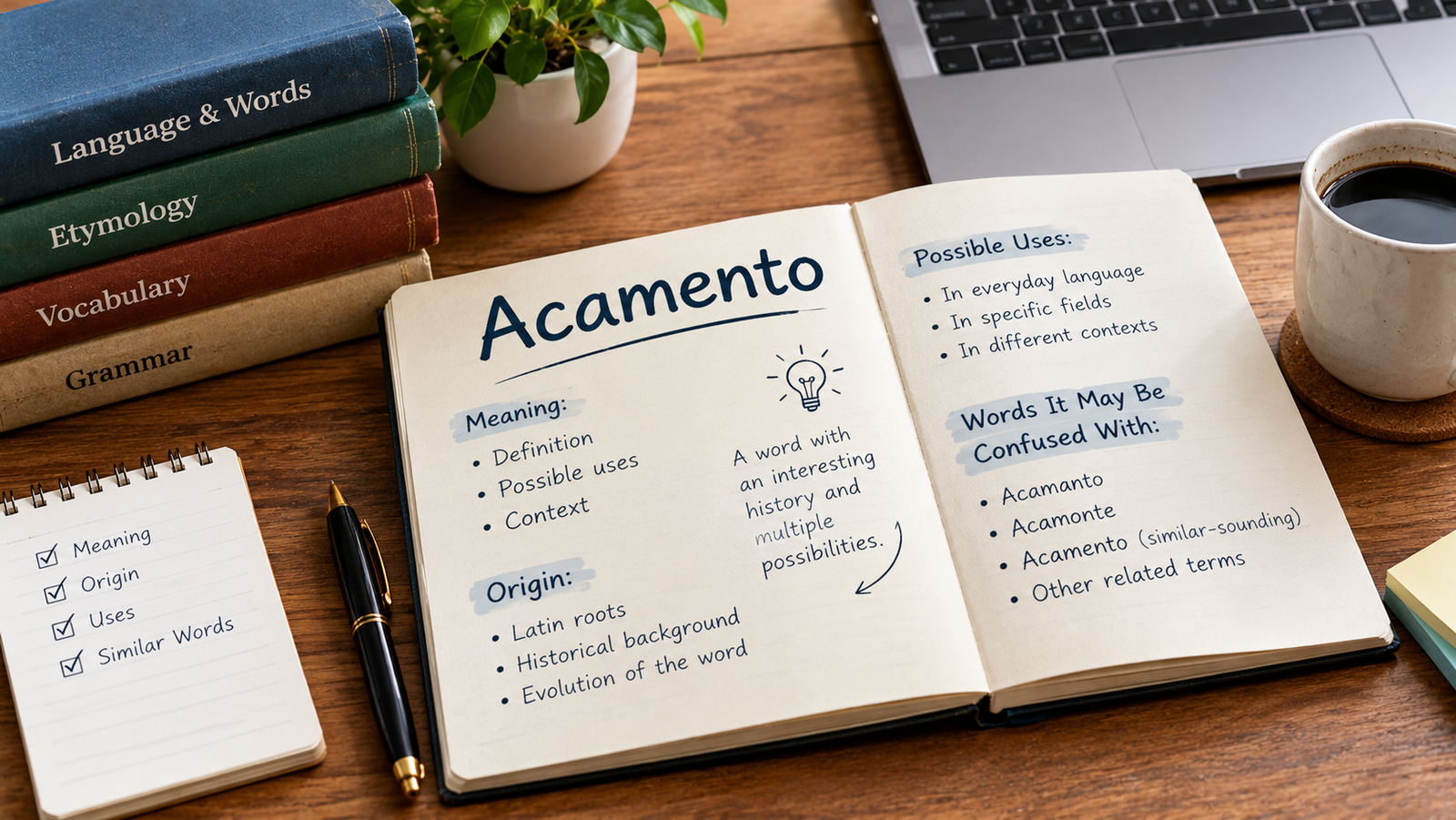
Acamento does not have one widely accepted, independently verified definition in standard English or Portuguese dictionaries. In online content, it is sometimes used as a shortened or altered form associated with the Portuguese word acabamento, meaning finishing, completion, or final refinement. It can also be confused with acamamento, a separate Portuguese term involving laying down, bedding, or stratification. Context is therefore essential.
Is Acamento a Real Word?
The simplest answer is: the exact spelling “acamento” should be treated cautiously rather than assumed to be an established technical word.
Established Portuguese dictionaries provide entries for acabamento and acamamento, but searches of the same major dictionary sources do not establish acamento as an equivalent standard entry.
For example, Infopédia defines acabamento as the action or effect of finishing or improving something, a conclusion, or the degree of perfection with which a work appears. It also specifically recognizes the term in industrial production.
Priberam similarly defines acabamento as the act of finishing, ending, completing, or improving something.
By contrast, acamamento comes from the verb acamar and has a different meaning. Priberam defines it as the act or effect of acamar, as well as the formation or arrangement of overlapping layers in geology.
So simply removing or changing letters from one word does not create a reliable new technical definition.
Acamento and Acabamento: What Is the Difference?
The most likely source of confusion is acabamento.
In Portuguese, acabamento is an established noun. Cambridge translates it in relevant contexts as finishing or finish, including final work performed in construction.
Infopédia gives it a broader meaning that includes:
- finishing or improving something
- a final touch
- completion
- the level of perfection of a finished work
- final operations in graphic production
In practical English, acabamento can therefore describe the final treatment or refinement applied to something.
For example, consider a wooden table.
The structural work creates the table. Sanding the surface, applying stain or paint, protecting the wood, and completing the final detailing are part of its finish or finishing process.
That is the basic idea represented by acabamento.
Why the Confusion Happens
The spellings are visually similar:
| Term | General meaning | Status |
| Acamento | No single established standard meaning | Ambiguous |
| Acabamento | Finishing, completion, refinement | Established Portuguese word |
| Acamamento | Act of laying down; layering; lodging in agricultural contexts | Established Portuguese word |
| Acampamento | Camping or campsite | Different Portuguese word |
This is why searching by spelling alone can produce misleading results.
What Does Acabamento Mean in Construction?
If someone uses acamento while discussing buildings, walls, flooring, furniture, or architecture, they may actually be referring to acabamento.
In construction, finishing refers to work that completes and improves visible or functional surfaces after major structural work has been performed.
Examples include:
- wall finishing
- plastering
- painting
- flooring
- tiling
- surface treatment
- trim
- decorative details
- final protective coatings
Cambridge specifically gives acabamento as the Portuguese term associated with final improvement or finishing, especially in construction.
The finish can influence both appearance and practical performance.
A wall may be structurally sound but still require plaster, paint, or another surface treatment. A wooden product may be properly assembled but need sanding and protective finishing before it is considered complete.
Finish Is More Than Decoration
A common misunderstanding is that finishing only makes something look attractive.
That is not always true.
Depending on the material and application, finishing can affect:
- surface smoothness
- resistance to wear
- moisture protection
- ease of cleaning
- appearance
- durability
- tactile quality
- corrosion resistance
The exact purpose depends on the material and industry.
Acamento and Acamamento: A Completely Different Meaning
Another possible source of confusion is acamamento.
Unlike acabamento, this word begins with acama-, not acaba-.
Priberam defines acamamento as the act or effect of acamar. The same entry also includes meanings related to prolonged bed rest and geological layering.
Infopédia defines acamamento as the act or effect of acamar and, in geology, the arrangement of sedimentary rocks in layers or strata.
In agriculture, the concept can have an especially important meaning.
Acamamento in Agriculture
Agricultural researchers use acamamento to describe a condition in which plants bend or fall over.
Embrapa has published research specifically titled “Acamamento de plantas na cultura da soja”, discussing the problems caused by lodging, factors that influence it, and practices that can reduce it.
The research explains that soybean lodging can involve falling or bending of plants and can reduce productivity and grain quality. It also identifies factors that affect the condition and management practices that can minimize it.
Therefore, if you encounter acamento in an agricultural discussion, it is worth checking whether the intended word was actually acamamento.
Why the Exact Spelling Matters
A single missing letter can completely change a word.
Compare:
acabamento → finishing
acamamento → lodging, laying down, layering
acampamento → camping
These words may look similar to someone unfamiliar with Portuguese, but they refer to different ideas.
This is especially relevant when a term is copied between websites. Once an unusual spelling appears online, other pages may repeat it without checking a dictionary or original-language source.
As a result, a search engine can eventually show many pages using the same spelling even when the underlying terminology is uncertain.
The number of pages using a word does not, by itself, prove that the word is an established technical term.
Possible Meanings Found Online
Recent web pages use acamento in several different ways.
Some describe it as a concept related to:
- finishing
- refinement
- craftsmanship
- design
- construction
- digital workflows
- online identity
- general project completion
The problem is that these descriptions do not form one consistent technical definition.
For example, one current website describes Acamento as a concept inspired by the Portuguese word acabamento and associates it with adding final touches to houses, clothing, furniture, and other objects.
Other recent pages present the word as an emerging concept or even as a digital platform, but the descriptions vary substantially.
That inconsistency is a reason to avoid presenting acamento as a formally recognized methodology, software platform, or industry standard without stronger evidence.
Is Acamento a Design or Craftsmanship Method?
There is not enough reliable evidence to call acamento an established design discipline or standardized craftsmanship method.
The idea of careful finishing is certainly real.
Carpenters, builders, manufacturers, graphic professionals, textile workers, and designers all use finishing processes. Portuguese terminology also has an established word, acabamento, for finishing and refinement.
But that does not automatically establish acamento as the name of a formal method.
A useful distinction is:
The underlying concept may be real even when the label used to describe it is not standardized.
For example, sanding and polishing a wooden surface are real finishing activities. Calling that process “acamento” requires separate evidence that the term is actually used that way by the relevant professional community.
Is Acamento a Software Platform?
Search results may also create the impression that Acamento is a digital product or software platform.
Current online descriptions are inconsistent. Some pages describe a supposed productivity or workflow system, while others present the term as a general digital philosophy.
However, an established software product would normally have identifiable evidence such as:
- a consistent company identity
- an official product page
- identifiable developers or owners
- documentation
- terms of service
- pricing information where applicable
- app-store listings if mobile applications exist
- consistent product descriptions
The available search results do not establish one universally recognized Acamento software product.
That does not prove that no private project, website, or application could use the name. It simply means that the word itself should not automatically be treated as the name of a verified software platform.
Why So Many Websites May Describe Acamento Differently
There are several possible explanations.
1. Spelling Variation
Someone may have intended to write acabamento or acamamento but shortened or misspelled the word.
2. A Brand or Coined Name
A company, website, creator, or project can invent a name. A coined brand name does not need to be a dictionary word.
3. Search-Driven Content
Unusual keywords can attract articles because there is little competition for them. Once several pages publish similar explanations, the term can appear more established than it actually is.
4. Translation or Localization
A Portuguese word may be translated, shortened, or adapted for an English-speaking audience.
5. Independent Online Usage
Different websites may use the same unusual spelling for different ideas without being connected to one another.
Because these possibilities can produce very different meanings, context is essential.
How to Determine What Someone Means by Acamento
If you encounter the term in an article, message, product description, or website, use a simple process.
Step 1: Look at the surrounding words
Words such as construction, wall, floor, surface, furniture, or polishing suggest that the writer may mean acabamento.
Words such as soil, crop, soybean, plant, stem, lodging, or wind damage suggest acamamento.
Words such as camp, tent, outdoor, or travel could point toward acampamento.
Step 2: Check the original language
If the source is Portuguese, look up the exact Portuguese spelling rather than assuming that an English-language article has preserved it correctly.
Step 3: Check an established dictionary
Reliable dictionaries can distinguish similar-looking terms.
Priberam, for example, gives separate entries and definitions for acabamento and acamamento.
Step 4: Check industry sources
If the context is agriculture, construction, manufacturing, geology, or another technical field, look for professional or institutional sources.
For agriculture, Embrapa’s research on soybean lodging provides a good example of why industry-specific terminology matters.
Step 5: Do Not Treat Search Volume as Proof
A word appearing on dozens of websites does not automatically make it an established technical term.
Definition quality depends on evidence, not the number of pages repeating a claim.
Real-World Examples
Example 1: A Furniture Project
Someone writes:
“The final acamento gives the cabinet a smooth appearance.”
If the writer is discussing Portuguese terminology, they may mean acabamento, or finishing.
The relevant work could include sanding, staining, polishing, or applying a protective coating.
Example 2: A Construction Project
A contractor discusses the “final acamento” of a building.
Again, the likely intended concept may be acabamento, referring to finishing work such as paint, flooring, trim, or other final surface treatments.
Example 3: A Soybean Field
A farmer reports that the plants fell over after strong weather.
Here, the relevant Portuguese technical term may be acamamento, not acabamento.
Embrapa research specifically addresses soybean plant lodging and its effects on crop performance.
Example 4: A Website Calling Something Acamento
Suppose a website defines Acamento as a digital framework.
The safest approach is to treat that as the site’s own terminology unless independent evidence shows that the term has a broader, established meaning.
A website can define a brand or coined concept, but that does not make the definition a standard dictionary meaning.
Common Misconceptions About Acamento
Misconception 1: Acamento Has One Universal Definition
There is no strong evidence supporting one universal definition for the exact spelling.
The meaning depends heavily on context.
Misconception 2: Acamento Is Automatically the Portuguese Word for Finish
The established Portuguese word is acabamento, not simply acamento. Cambridge and Portuguese dictionaries document acabamento as meaning finish or finishing in relevant contexts.
Misconception 3: Acamento and Acamamento Are the Same
They are not.
Acamamento has its own dictionary definition and is also used in agricultural research to describe plant lodging.
Misconception 4: Many Search Results Prove a Term Is Official
They do not.
Search engines index content created by many different publishers. Repetition can spread an interpretation without establishing linguistic or technical authority.
Misconception 5: A Similar-Looking Word Must Have the Same Root
Not necessarily.
Portuguese has several words that look similar but have different origins and meanings. Dictionary entries show that acabamento derives from acabar, while acamamento derives from acamar.
Acamento vs. Acabamento vs. Acamamento
The distinction can be summarized simply:
| Term | Meaning | Typical context |
| Acamento | No stable standard definition established | Ambiguous/online usage |
| Acabamento | Finishing, completion, final refinement | Construction, manufacturing, design, general Portuguese |
| Acamamento | Act of laying down; layering; lodging | Geology, agriculture, other contexts |
| Acampamento | Camping or camp | Travel and outdoor activities |
The table is useful because the spelling differences are small while the meanings are not.
Why Finishing Matters When “Acamento” Means Acabamento
If your source clearly uses acamento to mean finishing, the underlying concept of acabamento is worth understanding.
Finishing is often the stage where small details become visible.
A poorly prepared surface may remain rough after painting. An incorrectly applied coating may peel. Poor trim work can make a professionally constructed room look unfinished.
In manufacturing, finishing may also influence functional properties.
Depending on the material, a finishing treatment can affect:
- appearance
- smoothness
- protection
- resistance to wear
- corrosion resistance
- maintenance
- tactile feel
- final dimensions or surface characteristics
The exact process depends on the material and application. Metal finishing, wood finishing, textile finishing, and building finishing are not interchangeable processes.
Infopédia’s Portuguese-English reference also documents acabamento across several industrial and technical fields, including textiles, wood, metal, construction, chemistry, and mechanical engineering.
Why Acamamento Matters in Agriculture
If the intended word is acamamento, the subject changes completely.
Plant lodging can affect crop production because plants that bend or fall may have more difficulty maintaining an efficient canopy and can become harder to harvest.
Embrapa’s soybean research identifies lodging as a problem that can reduce productivity and grain quality. The effects depend partly on when the lodging occurs and how severe it is.
Management therefore focuses on reducing the factors that make crops vulnerable.
The specific solution depends on crop, cultivar, planting arrangement, environment, and management practices. Farmers should use crop-specific recommendations rather than assuming that one technique works for every field.
A Practical Checklist for Evaluating the Term
When you encounter acamento, ask:
- What language is the source using?
- Is the exact spelling confirmed by a dictionary?
- Could the writer mean acabamento?
- Could the writer mean acamamento?
- Is the word being presented as a brand or coined concept?
- Does an independent professional source use it the same way?
- Does the claimed definition fit the surrounding context?
- Is the explanation supported by primary or authoritative sources?
This checklist helps prevent a common research mistake: treating an unfamiliar word as established simply because several websites use it.
Key Facts About Acamento
- Acamento does not have a clearly established universal definition in the major Portuguese dictionary sources checked.
- Acabamento is an established Portuguese word meaning finishing, completion, refinement, or final treatment.
- Acamamento is another established Portuguese word with a different meaning.
- In geology, acamamento can refer to the arrangement of sedimentary rocks in layers.
- In agriculture, acamamento is used in research concerning plant lodging.
- Cambridge translates acabamento as “finishing” or “finish” in relevant construction contexts.
- Online pages sometimes use acamento as a shortened, adapted, or coined term related to finishing and refinement.
- The existence of many online articles does not establish a word as a standard technical term.
- Context is the best way to determine what the writer intended.
Frequently Asked Questions
What is acamento?
Acamento is an ambiguous term without one clearly established standard definition in the major Portuguese dictionary sources checked. Online, it is sometimes used in connection with finishing or refinement, but it may also represent a spelling variation or coined term.
Is acamento a Portuguese word?
The exact spelling should be treated cautiously. Established Portuguese dictionaries document acabamento and acamamento, but these are different words with different meanings.
What does acabamento mean?
Acabamento means finishing, completion, refinement, or the final treatment that completes something. It can be used in construction, manufacturing, graphic production, and other contexts.
What does acamamento mean?
Acamamento means the act or effect of acamar. Depending on context, it can refer to laying something down, arrangement in layers, or lodging. In geology it can describe stratification, while agricultural research uses the term for plant lodging.
Is acamento the same as acabamento?
Not as a matter of standard Portuguese terminology. Acabamento is the established word for finishing or completion. Some online pages use acamento in a similar sense, but that usage should not automatically be treated as a dictionary definition.
Is acamento a construction term?
There is no strong evidence that acamento itself is a standardized construction term. If it appears in a construction context, the writer may be referring to acabamento, the established Portuguese term for finishing work.
Is acamento an agricultural term?
Not in the same established sense as acamamento. If the context involves crops bending or falling, acamamento is the relevant Portuguese term. Embrapa uses it in research on soybean lodging.
Is Acamento a software platform?
There is no single, consistently documented software product that can be identified simply from the keyword Acamento. Some online pages use the name for digital concepts, but those claims should be checked against an identifiable official product or company.
Why does Acamento appear on many websites?
The term has been used by numerous recent online publishers, often with different explanations. This can happen because of spelling variations, coined terminology, brand naming, or search-focused content. The quantity of pages does not establish a single authoritative definition.
How should I interpret acamento in an article?
Look at the surrounding subject. If the article discusses surfaces, buildings, furniture, or finishing, the intended word may be acabamento. If it discusses crops, plants, or lodging, acamamento may be intended. If neither fits, the writer may be using acamento as a coined or brand-specific term.
What is the safest definition of acamento?
The safest description is that acamento is an ambiguous spelling whose meaning depends on context and should not automatically be treated as a standardized technical word. When the intended concept is finishing, acabamento is the established Portuguese term; when the subject is lodging or layering, acamamento may be the correct term.
Key Takeaways
- Acamento is not a straightforward dictionary term with one universally accepted meaning.
- The closest established Portuguese word for finishing or final refinement is acabamento.
- The established word acamamento has a different meaning involving laying down, layering, or lodging.
- Agricultural literature uses acamamento when discussing plant lodging, including soybean crops.
- Construction and manufacturing contexts often point toward acabamento rather than acamento.
- Some websites use Acamento as a coined or modern concept, but those descriptions should not be confused with established dictionary definitions.
- Always check the original spelling, language, and context before assigning a meaning to an unfamiliar term.
Conclusion
Acamento is best understood as an ambiguous online term rather than a universally established technical word. Its appearance in recent web content is often connected with the established Portuguese concept of acabamento, meaning finishing or refinement, but the spelling itself should not automatically be treated as a standard synonym.
Another important possibility is acamamento, which is a genuine Portuguese word with different meanings and established use in fields such as geology and agriculture. Embrapa’s research on soybean lodging demonstrates that distinction clearly.
For anyone researching the term, the most reliable approach is simple: check the exact spelling, identify the language and context, and verify the definition against established dictionaries or professional sources. That method provides a much clearer answer than relying on repeated online descriptions alone.

Introduction
If you have searched for domikyo.com, you may have noticed that different pages describe the website in slightly different ways. Some references associate it strongly with smart-home technology, networking, connected devices, IoT, and cybersecurity. Other descriptions present it as a broader information website covering technology, business, finance, health, lifestyle, education, travel, and digital trends.
That difference makes Domikyo.com worth examining carefully rather than assuming it is a single-purpose technology product.
The available evidence points to an online content and information platform, not a standalone mobile application or hardware manufacturer. Technology appears to be one of its strongest recurring themes, particularly subjects related to connected homes and digital connectivity. At the same time, public information about its ownership, editorial team, and exact current category structure is limited.
For readers, the key question is not simply whether Domikyo.com exists. It is what the site actually provides, how its information should be evaluated, and when readers should verify its claims through more authoritative sources.
What Is Domikyo.com?
Domikyo.com is an online information and content website associated with technology, digital trends, smart-home systems, Internet of Things (IoT), networking, and broader general-interest topics. Recent descriptions also associate the domain with business, finance, health, lifestyle, education, and travel. Because the site’s live homepage currently restricts automated retrieval, some details about its current editorial structure cannot be independently confirmed from the site itself.
In practical terms, Domikyo.com is better understood as a website for reading informational content rather than a product that users download or a hardware company that manufactures smart-home devices.
This distinction matters because some searchers may see words such as smart home, IoT, or networking and assume Domikyo sells the devices being discussed. The available evidence does not establish it as a hardware manufacturer.
Is Domikyo.com a Website, App, or Product?
Domikyo.com is a website.
It is not clearly established as:
- A mobile application
- A smart-home hardware manufacturer
- A router manufacturer
- A dedicated IoT device brand
- A financial brokerage
- A software product requiring installation
Recent third-party descriptions consistently characterize the domain as an information or content platform.
This is one of the easiest points to misunderstand when searching an unfamiliar domain.
For example, if an article on Domikyo discusses smart locks, Wi-Fi routers, or connected sensors, that does not necessarily mean Domikyo produces or sells those products. The site can simply be explaining the technology.
What Topics Does Domikyo.com Cover?
The site’s public footprint suggests a broad editorial approach, although technology and connected-home subjects are particularly prominent in recent search results.
Technology and Digital Trends
Technology is one of the clearest themes associated with Domikyo.com.
Reported technology topics include:
- Smart-home technology
- Internet of Things
- Home networking
- Connected devices
- Digital connectivity
- Cybersecurity
- Artificial intelligence
- Emerging technology
- Digital trends
- Device integration
Recent descriptions specifically connect Domikyo.com with smart-home networking, IoT integration, connected devices, and digital security.
Smart-Home Technology
Smart-home content is particularly important when examining the domain’s current online footprint.
Smart-home technology refers to household devices that can communicate through a network or be controlled digitally.
Examples include:
- Smart lights
- Smart thermostats
- Smart locks
- Security cameras
- Motion sensors
- Smart speakers
- Connected appliances
- Home hubs
- Automated blinds
A smart home can be compared to a small digital ecosystem. Instead of each device working completely alone, devices communicate through networks, applications, hubs, or interoperability standards.
That means reliable smart-home information needs to address more than the device itself.
It should also consider networking, security, compatibility, firmware updates, privacy, and what happens when an internet connection fails.
What Is IoT and Why Does It Matter to Domikyo.com?
IoT, or the Internet of Things, describes physical objects that contain sensors, software, networking capabilities, or other technology that allows them to communicate or exchange data.
A connected thermostat is an easy example.
A traditional thermostat simply measures temperature and controls heating or cooling.
An IoT-enabled thermostat can potentially connect to a network, communicate with an application, receive remote instructions, and interact with other systems.
The same basic idea applies to cameras, lights, door locks, appliances, industrial sensors, and many other connected devices.
Because smart-home systems rely heavily on IoT, understanding the underlying network is often just as important as understanding the device.
Recent descriptions of Domikyo.com specifically associate the site with IoT and smart-home guidance.
Domikyo.com and Home Networking
Home networking is another recurring technology theme associated with Domikyo.com.
A home network connects devices so they can communicate with one another and access services.
Typical components can include:
- Internet connection
- Modem or gateway
- Router
- Wi-Fi access points
- Ethernet cables
- Computers
- Phones
- Smart TVs
- IoT devices
- Smart-home hubs
Why Does Networking Matter for Smart Homes?
Imagine buying a high-quality security camera but installing it in a part of the house with weak Wi-Fi.
The camera itself may work perfectly.
The problem is the network.
This is why useful smart-home guidance should explain concepts such as:
Bandwidth: how much data a network can transfer.
Latency: how long data takes to travel between systems.
Coverage: how far a wireless signal reaches reliably.
Backhaul: the connection used to carry traffic between network components, particularly in mesh systems.
Network segmentation: separating different categories of devices so that a problem affecting one group does not automatically expose everything else.
These concepts may sound technical, but they directly affect everyday experiences such as video quality, device responsiveness, and reliability.
Smart Home Security and Domikyo.com
Connected devices introduce another issue: security.
A smart camera, doorbell, speaker, or appliance is not simply a household object. If it connects to a network, it can become another endpoint that needs protection.
Good smart-home security practices generally include:
- Using strong, unique passwords
- Enabling multi-factor authentication where available
- Updating device firmware
- Replacing default credentials
- Buying devices from reputable manufacturers
- Reviewing privacy settings
- Securing the home router
- Separating sensitive devices when appropriate
- Removing unsupported devices from the network
This is an area where readers should be especially careful with any online technology article.
Cybersecurity advice can affect real-world safety and privacy. A general blog post should therefore be treated as educational material rather than the only authority for a security-critical decision.
Does Domikyo.com Cover Business, Finance, and Health?
Yes, broader descriptions of the domain associate it with business, finance, health, lifestyle, education, travel, and other general-interest topics.
However, there is an important qualification.
The available evidence does not provide enough information to conclude that every category is equally active, equally authoritative, or equally prominent on the current website.
A site can publish articles across several categories while having a much stronger footprint in one area.
This matters particularly for health and finance.
Technology information and medical or financial advice have very different standards of evidence. A reader should not assume that because a site explains a networking concept reasonably well, every health or investment article deserves the same level of confidence.
When Was Domikyo.com Created?
Technical information from BuiltWith indicates that domikyo.com was first registered on December 5, 2020. BuiltWith also detected the domain’s technologies in September 2026.
However, domain-registration age and website-launch date are not necessarily identical.
A domain may:
- Change owners
- Change content
- Change design
- Remain registered while inactive
- Be repurposed for a different publishing project
Therefore, December 5, 2020 should be treated as the reported domain-registration date, not automatically as the exact launch date of the current Domikyo.com publication.
Has Domikyo.com Changed Focus Over Time?
The public footprint suggests that the domain’s identity may have changed or broadened.
Some current third-party references emphasize:
- Smart homes
- IoT
- Networking
- Connected technology
- Cybersecurity
Other sources describe a much wider information platform covering technology, business, finance, health, lifestyle, education, and travel.
That does not necessarily mean one source is wrong.
Websites evolve.
A domain can start with one editorial direction and later expand into other categories. It can also publish multiple categories simultaneously while search engines associate it more strongly with one topic.
The safest conclusion is that Domikyo.com’s current public identity is broader than a single smart-home topic, while smart-home and connected technology remain prominent themes in recent search results.
Who Owns Domikyo.com?
Public information about the site’s ownership is limited.
Recent research into the domain has not established a reliably documented founder, owner, headquarters, or clearly identified editorial organization.
This does not prove that the website is unsafe.
It simply means that readers should avoid repeating an individual’s name or a company’s identity as the confirmed owner unless that information can be established through a reliable primary source.
Technical records can tell us about a domain’s infrastructure without telling us who ultimately operates the publication.
Does Domikyo.com Have a Public Editorial Team?
There is limited independently verifiable information about a formal editorial team.
Some articles published about the site refer to writers or authors, but the available evidence does not establish a complete editorial organization with clearly documented expertise across every subject.
For readers, this means the individual article deserves attention.
When reading an important piece, check:
- Who wrote it?
- When was it published?
- Has it been updated?
- What sources are cited?
- Are primary sources available?
- Does the author’s expertise match the subject?
Those questions are more useful than judging an entire website from its domain name alone.
Is Domikyo.com a Trustworthy Website?
There is no single yes-or-no answer that can establish the reliability of every article on a broad content website.
A better approach is to evaluate the specific information you plan to use.
Signs of stronger content
Look for:
- A clearly identified author
- A publication date
- Recent updates when appropriate
- Links to authoritative sources
- Original evidence
- Clear explanations
- Appropriate qualifications
- Corrections when errors are discovered
- A distinction between facts and opinions
Signs that call for extra caution
Be careful when an article:
- Makes major claims without evidence
- Uses anonymous sources for important facts
- Gives medical advice without credible references
- Promises financial results
- Uses sensational headlines
- Presents old information as current
- Copies information from other websites
- Makes technical claims without explaining how they were established
These checks are especially important when reading content about health, cybersecurity, finance, or personal safety.
Is Domikyo.com Safe to Visit?
Technical records indicate that Domikyo.com uses standard web infrastructure including HTTPS/SSL and Cloudflare-related services. BuiltWith also reports Cloudflare DNS and CDN technologies.
HTTPS means that communication between a browser and website can be encrypted in transit. It is an important baseline security feature.
But HTTPS alone does not prove that every piece of information on a website is accurate or that every link on a website is harmless.
These are separate questions:
Technical security: Can the connection be encrypted?
Content reliability: Is the information accurate?
Editorial trust: Does the publisher provide sufficient evidence?
A secure connection cannot answer the other two questions.
Is Domikyo.com a Smart-Home Product?
No clear evidence establishes Domikyo.com as a hardware manufacturer.
The site is better described as an information platform that discusses smart-home and connected technologies.
That distinction is useful when searching for information about:
- Smart-home systems
- Wi-Fi
- IoT
- Home automation
- Connected devices
- Networking
- Cybersecurity
If an article discusses a specific device, readers should still check the manufacturer’s official documentation for specifications, compatibility, firmware requirements, and safety information.
How to Use Domikyo.com for Technology Research
If you find a useful article on Domikyo.com, you can use a simple research process.
Step 1: Identify the exact question
Instead of reading randomly, define what you need.
For example:
“Why does my smart camera disconnect from Wi-Fi?”
This produces a more focused research path than searching for “smart home.”
Step 2: Read the relevant explanation
Use the article to understand the basic concept and identify possible causes.
Step 3: Identify technical terms
You may encounter terms such as:
- 2.4 GHz
- 5 GHz
- Mesh Wi-Fi
- IP address
- Latency
- IoT
- Firmware
- Matter
- Thread
Write down unfamiliar terms and verify them separately.
Step 4: Check primary documentation
If the issue involves a specific device, visit the manufacturer’s support documentation.
Step 5: Test changes carefully
Do not change important network-security settings blindly.
Make one change at a time and observe the result.
Step 6: Verify high-impact claims
For cybersecurity, privacy, health, finance, or safety-related advice, seek authoritative sources before acting.
This process turns a general information article into the starting point for responsible research rather than treating it as the final authority.
Domikyo.com and Matter, Thread, and Smart-Home Interoperability
Readers researching modern smart homes may encounter Matter and Thread.
These terms are related but do not mean the same thing.
What Is Matter?
Matter is a smart-home interoperability standard designed to help compatible devices communicate across supported ecosystems.
Its purpose is to reduce some of the compatibility problems that have historically existed between smart-home platforms.
What Is Thread?
Thread is a low-power wireless networking technology designed for connected devices.
It can be used by compatible smart-home devices to form a mesh network.
Why Do They Matter?
Imagine buying:
- A smart door sensor
- A smart light
- A thermostat
- A smart speaker
If each product requires a completely separate ecosystem, the setup becomes complicated.
Interoperability standards can reduce some of that complexity.
However, compatibility should always be checked at the individual product level. “Supports smart home” does not automatically mean that every device works with every platform.
Benefits of Using Domikyo.com as an Information Source
Broad subject coverage
A multi-topic site can be convenient for readers who want to explore different subjects in one place.
Beginner-friendly technology topics
Recent descriptions associate the domain with explanations of smart homes, networking, IoT, and digital connectivity intended for general readers.
Useful starting point
An introductory article can help readers identify concepts and questions they should investigate further.
Cross-topic discovery
Technology increasingly overlaps with business, finance, health, lifestyle, and education. A broad information site can reflect those connections.
Limitations of Domikyo.com
The site’s broad scope can also create limitations.
Multi-niche content may vary in depth
A website covering many subjects may not provide the same specialist depth as a publication dedicated entirely to networking, cybersecurity, medicine, or finance.
Ownership transparency is limited
Publicly verified information about the site’s owners and editorial organization is limited.
Current structure is difficult to verify independently
The live domain currently returns a 403 response to automated retrieval, which limits direct verification of its current homepage and category structure.
Third-party descriptions do not always agree
Some sources emphasize smart-home technology, while others describe a broad multi-niche publication.
That inconsistency means readers should avoid treating every description found online as an official statement.
Common Mistakes When Researching Domikyo.com
Mistake 1: Assuming the domain name tells you what the site does
The word “Domikyo” does not by itself explain the site’s purpose.
Look at the actual content and supporting evidence.
Mistake 2: Treating third-party descriptions as official
An article saying that Domikyo.com covers a particular subject does not necessarily mean the site’s operators officially define themselves that way.
Mistake 3: Confusing a technology article with a product advertisement
An article about a smart-home device does not necessarily mean the website sells the device.
Mistake 4: Assuming HTTPS means the content is accurate
Encryption and editorial reliability are different issues.
Mistake 5: Using one article for an important decision
For medical, financial, cybersecurity, or safety decisions, verify important claims through authoritative sources.
Mistake 6: Treating domain age as proof of authority
A domain registered in 2020 has history, but age alone does not prove expertise, accuracy, or editorial quality.
Real-World Example: Researching a Smart Camera Problem
Suppose a homeowner installs a smart security camera.
The camera works near the router but repeatedly disconnects when moved to another room.
A useful research process would look like this:
First: Read an introductory networking explanation to understand signal strength and interference.
Second: Check whether the camera supports the home’s Wi-Fi frequency bands.
Third: Test the network in the camera’s intended location.
Fourth: Review the camera manufacturer’s troubleshooting instructions.
Fifth: Check firmware and router settings.
Sixth: Consider whether a mesh access point or wired connection would solve the coverage problem.
This example shows how an informational website can be useful without being the final authority.
The article gives the reader a framework. The device manufacturer and network documentation provide the product-specific details.
What Should Readers Know Before Using Information From Domikyo.com?
A useful rule is:
The more serious the decision, the stronger the verification should be.
For casual technology reading, an introductory article may be enough to understand a concept.
For a cybersecurity configuration, you should verify the technical recommendation.
For financial information, consult authoritative financial sources.
For medical information, use recognized medical or government sources and qualified professionals when appropriate.
This approach does not require rejecting Domikyo.com. It simply puts the website in the correct role: an information source that should be evaluated according to the quality and importance of the individual claim.
Key Facts About Domikyo.com
- Domikyo.com is an online information/content website, not clearly a standalone app or hardware manufacturer.
- Technology is one of the strongest themes associated with the domain.
- Recent third-party coverage frequently connects it with smart homes, IoT, networking, connected devices, and cybersecurity.
- Other descriptions associate the domain with business, finance, health, lifestyle, education, travel, and digital trends.
- BuiltWith reports that the domain was first registered on December 5, 2020.
- BuiltWith detects Cloudflare-related infrastructure and HTTPS/SSL on the domain.
- Publicly verified information about the site’s ownership and editorial leadership is limited.
- The live domain currently restricts automated retrieval with a 403 response, limiting direct independent inspection of its current homepage.
- A domain’s age, HTTPS configuration, or technical infrastructure does not by itself prove editorial authority or factual accuracy.
Frequently Asked Questions
What is Domikyo.com?
Domikyo.com is an online information website associated with technology, digital trends, smart-home technology, IoT, networking, and broader general-interest content. Other recent descriptions also associate it with business, finance, health, education, lifestyle, and travel.
Is Domikyo.com a smart-home company?
There is no strong evidence establishing Domikyo.com as a smart-home hardware manufacturer. It is better understood as an information website that discusses smart-home and connected technologies.
What does Domikyo.com cover?
Its reported coverage includes technology, smart homes, IoT, networking, cybersecurity, digital trends, business, finance, health, lifestyle, education, and travel. The exact balance of these categories may change over time.
Is Domikyo.com an app?
No clear evidence indicates that Domikyo.com is primarily a downloadable mobile application. Available descriptions characterize it as a website and online content platform.
When was Domikyo.com registered?
BuiltWith reports December 5, 2020 as the domain’s first registration date. This should not automatically be interpreted as the exact launch date of the current website.
Who owns Domikyo.com?
A clearly documented owner or founder has not been established through the reliable public sources reviewed for this article. Readers should be cautious with websites that assign ownership to a specific individual without primary evidence.
Is Domikyo.com trustworthy?
Its articles should be evaluated individually. Check the author’s identity, publication date, supporting sources, and evidence. Be particularly careful with health, finance, cybersecurity, and safety claims.
Is Domikyo.com safe to visit?
Technical information indicates that the domain uses HTTPS/SSL and Cloudflare-related infrastructure. However, technical security does not guarantee that every article or external link is accurate or trustworthy.
Does Domikyo.com cover IoT?
Yes. Recent descriptions repeatedly associate the domain with the Internet of Things, connected devices, smart-home systems, and digital connectivity.
Does Domikyo.com provide smart-home product reviews?
Some third-party descriptions associate the domain with smart-home product information and reviews. However, because direct automated access to the current domain is restricted, individual review pages should be checked directly before making a claim about the site’s present review structure.
Is Domikyo.com the same as Domikyo.org?
No. The domains are different websites. Information published on domikyo.org should not automatically be attributed to domikyo.com.
Should you rely on Domikyo.com for financial or health decisions?
General articles can help with background information, but important financial and health decisions require stronger verification from appropriate authoritative sources and, when necessary, qualified professionals.
Key Takeaways
- Domikyo.com is best understood as an online information platform.
- Its strongest recurring public association is with technology, smart homes, IoT, networking, and digital connectivity.
- Broader descriptions also associate it with business, finance, health, lifestyle, education, and travel.
- The site’s public identity appears broader than a dedicated smart-home website, although technology is a particularly visible theme.
- The domain was reportedly first registered on December 5, 2020.
- Publicly verified ownership and editorial-team information is limited.
- HTTPS and Cloudflare infrastructure indicate standard technical protections, but they do not prove that content is accurate.
- Readers should evaluate individual articles based on sources, authorship, dates, evidence, and subject-matter expertise.
- Smart-home and IoT advice should be cross-checked with manufacturer documentation when a specific device is involved.
- Health, finance, cybersecurity, and safety-related claims deserve additional verification.
Conclusion
Domikyo.com is an online information website with a public footprint centered strongly on technology, smart-home systems, IoT, networking, and digital connectivity, while broader references associate it with several general-interest categories.
The most useful way to understand the site is not to force it into a single label. It appears to operate as a broad information property, with technology and connected-home subjects playing an important role in its current online identity. At the same time, limited public information about its ownership and editorial organization means readers should avoid assuming a level of authority that has not been independently demonstrated.
For everyday research, Domikyo.com can serve as a starting point for understanding unfamiliar concepts. When the information could affect money, health, privacy, cybersecurity, or physical safety, the better approach is to use the article as one source and verify important claims against primary documentation or recognized authoritative sources.
-

 Business4 months ago
Tennessee Titans Depth Chart 2026: Full Roster Breakdown by Position
-

 Health4 months ago
JD Vance Trump Health: What the Public Record Actually Shows
-

 News5 months ago
Delta Upgrade Dance Off at Salt Lake City: The Viral Gate Agent Story Explained
-

 Celebrity3 months ago
Nelly Net Worth: How the Rapper Built His Fortune
-

 News4 months ago
Ted Danson Blackface Incident: What Actually Happened at the 1993 Friars Club Roast
-

 Celebrity3 months ago
Kim Kardashian Net Worth: SKIMS and Her Billion-Dollar Rise
-

 News5 months ago
Was Kash Patel Removed? What the Search Actually Means
-

 Lifestyle5 months ago
Gulf of Oman: Geography, Importance, and Everything You Need to Know