
Business
Custody Law News: Key Changes Parents Need to Know in 2025–2026


Introduction
Family law rarely stands still, and the past twelve months have been unusually active. Across the United States, state legislatures have been updating child custody statutes, revising support formulas, and rethinking how courts handle safety concerns. For parents in the middle of a custody dispute — or those with existing orders — these changes are not abstract. They can affect parenting schedules, monthly payments, and even which parent a court views as the primary caregiver.
This overview of custody law news covers the most significant changes in 2025 and 2026, explains what they mean in practical terms, and addresses the questions parents most commonly ask when laws shift under their feet.
Note: This article is general information and not a substitute for legal advice specific to your situation. Laws vary by state. Always consult a licensed family law attorney in your jurisdiction.
Direct Answer: What Is Happening in Custody Law Right Now?
Custody law news in 2025–2026 centers on several major themes: states are increasing emphasis on child safety over automatic shared parenting, child support formulas are being updated to reflect modern income levels and living costs, courts are giving more weight to children’s expressed preferences, and digital tools are streamlining how parents file and modify custody orders. New Jersey, California, Georgia, and Texas have all enacted meaningful changes.
Why Custody Laws Are Changing Now
Child custody law has historically been slow to change — statutes written decades ago often governed cases well into the 21st century. Several forces have pushed legislatures to act more recently.
First, economic reality has outpaced older formulas. Child support calculations based on income data from the early 2000s no longer reflect what it costs to raise a child. States are revising their models to catch up.
Second, research on child development has shifted professional consensus. Evidence increasingly shows that high-conflict custody arrangements cause measurable harm to children. Courts are responding by emphasizing cooperation and safety rather than simply maximizing contact with both parents.
Third, domestic violence advocates have successfully pushed for stronger protections. Laws in multiple states now make it harder for an abusive parent to receive joint custody without clear evidence that the arrangement is safe.
New Jersey: Child Safety Now Comes First
One of the most significant pieces of recent custody law news comes from New Jersey. In January 2026, New Jersey enacted amendments to N.J.S.A. 9:2-4, the statute courts use when deciding child custody and parenting time. The changes place greater emphasis on child safety, require courts to consider children’s preferences more directly, limit certain court-ordered therapy and reunification programs, and require judges to make more detailed findings in contested custody cases.
What does this mean in practice? Previously, New Jersey law emphasized “frequent and continuing contact” with both parents as a default goal. The prior statutory emphasis on frequent and continuing contact with both parents has been removed. Child safety is now treated as a threshold concern.
For parents with safety concerns — whether involving domestic violence, substance abuse, or other risk factors — this is meaningful custody law news. Courts are now required to address those concerns head-on before determining parenting time, rather than treating them as factors to weigh alongside other considerations.
Mental health professionals involved in custody-related therapy must now meet licensing and, in some cases, specialized training requirements. The changes apply to pending and future custody matters, although existing custody orders are not automatically changed.
California: Sweeping Family Law Reforms
California produced some of the most wide-ranging custody law news in recent years, with changes affecting everything from how domestic violence is treated in custody cases to how child support is calculated.
Domestic Violence and Custody
A key 2025 update strengthens the rebuttable presumption against joint custody in cases involving domestic violence. If a parent has committed abuse, the court is less likely to award shared custody unless clear evidence shows it’s safe for the child. The new laws also increase access to restraining orders and expand judicial training requirements.
Updated Child Support Formula
California’s child support calculation underwent a significant overhaul. The state dramatically overhauled its child support laws and made changes to the child support formula. Key updates include an updated formula under SB 343 to reflect modern income levels and living costs, a raised income threshold for low-income protections now applying to those earning up to approximately $2,900 per month, and support suspension for incarcerated parents — support may pause during incarceration and resume ten months after release.
Courts can also now direct child support into special needs trusts to protect disabled children’s public benefits, and parents earning less than 70 percent of the Area Median Income are shielded from driver’s license suspension for nonpayment.
Spousal Support and Tax Changes
SB 711 changes how spousal support is treated for tax purposes beginning in 2026. Because guideline child support and spousal support both rely on income, tax changes can ripple through the entire support picture. Parents with existing orders may find that a modification is warranted simply because the tax treatment of their support payments has shifted.
Georgia: New Worksheets and Parenting Time Adjustments
Georgia families following custody law news have several changes to track, most of which took effect January 1, 2026.
Beginning January 1, 2026, a new child support worksheet replaced the existing formula, providing a more straightforward and equitable process for calculating support amounts. The 2026 updates also provide a clearer definition of the custodial parent, particularly in cases where children spend equal or nearly equal time with both parents.
A parenting time adjustment now accounts for the actual time a child spends with each parent when calculating child support obligations. This change ensures that child support payments more accurately reflect each parent’s involvement in childcare, potentially reducing the financial burden on noncustodial parents who maintain significant parenting time.
Georgia also addressed veterans’ benefits. Veterans’ disability benefits will be treated as credits in support calculations, preventing double-counting against disabled veterans.
Texas: Higher Income Cap for Support Calculations
Texas custody law news in 2025 centered on one specific but financially significant change. The primary change to child support laws in Texas concerns the maximum amount of monthly income that courts may assess when calculating child support payments. Family courts in Texas could previously only assess up to $9,200 in net monthly income. Due to Texas House Bill 2643, courts now consider net income up to $11,700 per month.
These changes to child support laws only apply to new cases and child support modifications filed on or after September 1, 2025.
Texas also enacted two bills affecting parental rights more broadly. Senate Bill 1936 revamps the rights of noncustodial parents and their ability to gain access to visitation schedules, giving these parents more opportunities to visit their children outside of the regular workweek.
National Trends Shaping Custody Law News
Beyond individual states, several national trends are shaping where custody law is heading.
Shared Custody Is the Default in More States
Courts now increasingly favor joint custody to ensure that both parents have an equal role in decision-making and time spent with the child. Laws have become more comprehensive in defining the “best interests of the child,” including considering the child’s emotional, mental, and physical needs, their relationship with each parent, and their preferences depending on their age and maturity.
This does not mean shared custody is automatic — particularly where safety concerns exist — but the baseline presumption in many states has shifted toward involvement of both parents.
Children’s Voices Carry More Weight
Multiple states, including New Jersey, have updated their statutes to give children’s expressed preferences more formal weight in custody proceedings. The age and maturity of the child typically determine how much influence their preference carries. In Georgia, for example, children who are fourteen or older may express a preference, but the judge still decides. Younger children may also share input if the court allows it.
Non-Traditional Families Are Getting More Recognition
Custody laws have become more inclusive of non-traditional families, including unmarried parents, same-sex couples, and blended families. California’s 2026 changes specifically address situations involving three-parent families and long-term partners who have functioned as a parent without formal legal status.
Digital Processes Are Replacing Paper
One of the quieter but practically significant pieces of custody law news is administrative. Multiple states have moved custody and support processes fully online — from permit applications to ownership transfers of support orders. This reduces delays, lowers costs, and makes it easier for parents without legal representation to navigate the system
Common Misconceptions About Custody Law
“Courts always favor mothers.” This is no longer accurate in any US jurisdiction. Fathers’ rights are the same as mothers’ in regard to child support. Courts focus on factors like income and involvement, not the gender of the parent. That said, historical patterns sometimes influence outcomes, which is why legal representation matters.
“50/50 custody means no child support.” Not necessarily. Even in 50/50 splits, child support may be paid if there is a difference in parents’ income levels or health-related issues. Courts calculate support based on income disparity, not just time.
“An existing custody order can’t be changed.” Orders can be modified when circumstances change. Georgia allows modifications if there is a material change in circumstances such as school issues, relocation, safety concerns, or major schedule changes. Most states have similar provisions.
“New laws automatically change my existing order.” They typically do not. Existing custody orders are not automatically changed by new legislation. A parent who believes a new law affects their situation must generally file for a modification.
Key Facts About Custody Law in 2025–2026
- New Jersey removed the default preference for “frequent and continuing contact” with both parents, making child safety the primary threshold.
- California’s updated child support formula under SB 343 accounts for modern income levels, gig work, and inflation.
- Georgia’s new child support worksheet, effective January 1, 2026, factors in actual parenting time when calculating obligations.
- Texas raised the income cap for child support calculations from $9,200 to $11,700 in net monthly income, effective September 2025.
- Multiple states are strengthening presumptions against joint custody in domestic violence cases.
- Children’s preferences are receiving more formal statutory recognition, particularly for teenagers.
- Veterans’ disability benefits are now treated as credits, not income, in several states’ child support calculations.
FAQ: Custody Law News
Can I modify my existing custody order based on new laws?
New laws do not automatically change existing orders. You typically need to file a modification petition and demonstrate a material change in circumstances. Consult a family law attorney in your state to assess whether recent changes give you grounds to seek a modification.
Do fathers have equal rights in custody cases?
Yes, legally. Courts are required to evaluate both parents equally based on the best interests of the child. In practice, outcomes depend on factors like involvement, stability, and cooperation — not gender.
What is “best interests of the child” and how is it determined?
It is the legal standard courts use to decide custody and parenting time. Factors typically include each parent’s relationship with the child, stability of the home environment, the child’s own preferences (depending on age), each parent’s ability to support the other’s relationship with the child, and any safety concerns.
How do domestic violence allegations affect custody?
They can significantly restrict the alleged abuser’s parenting time or require supervised visitation. California and New Jersey have both strengthened their presumptions against joint custody when domestic violence has occurred.
What is joint legal custody versus joint physical custody?
Legal custody refers to decision-making authority — schools, medical care, religious upbringing. Physical custody refers to where the child lives. Parents can share one without sharing the other. Many courts award joint legal custody even when physical custody is primarily with one parent.
How often can child support be modified?
Most states allow modifications when there is a substantial change in circumstances — a significant income change, a shift in parenting time, or a change in the child’s needs. Some states allow automatic reviews every few years.
Does the child’s preference determine custody?
Not alone. A child’s preference is one factor courts consider, and its weight depends on the child’s age and maturity. In most states, judges have final discretion regardless of what the child expresses.
Key Takeaways
- The biggest custody law news of 2025–2026 involves a national shift toward child safety over automatic shared parenting, particularly in domestic violence cases.
- New Jersey, California, Georgia, and Texas have all enacted significant changes to either custody statutes or child support formulas.
- Child support calculations are being updated across states to reflect current income levels, living costs, and modern work patterns including gig employment.
- Children’s preferences are receiving more statutory weight, especially for teenagers.
- Existing custody orders are not changed automatically by new laws — a formal modification process is required.
- Non-traditional families, veterans, and low-income parents are receiving more targeted legal protections under the most recent reforms.
- Digital filing and online processes are making it easier for parents to navigate the system without extensive legal bureaucracy.
Custody law is ultimately about children — their stability, safety, and relationships with the people who raise them. The legislative activity of 2025 and 2026 reflects a genuine effort by states to update frameworks that in some cases had not meaningfully changed in decades. For parents navigating these systems, staying current with custody law news is not just useful — it can directly affect the outcome of a case. When in doubt, consulting a licensed family law attorney in your state remains the most reliable way to understand how any of these changes apply to your specific situation.
Introduction
Hiroshima comes up often in history classes, news coverage, and conversations about Japan, but a lot of people aren’t sure they’re saying it right. Some learned it from a textbook, some from a documentary narrator, and some just guessed based on how it’s spelled. Because the word gets mispronounced so often in English, even by people speaking on television, it’s worth taking a few minutes to get it right, especially given how much weight this place name carries in modern history.
This guide breaks down exactly how to pronounce Hiroshima pronunciation, both the way native Japanese speakers say it and the way it’s commonly adapted into English, along with where most pronunciation mistakes come from.
Direct Answer
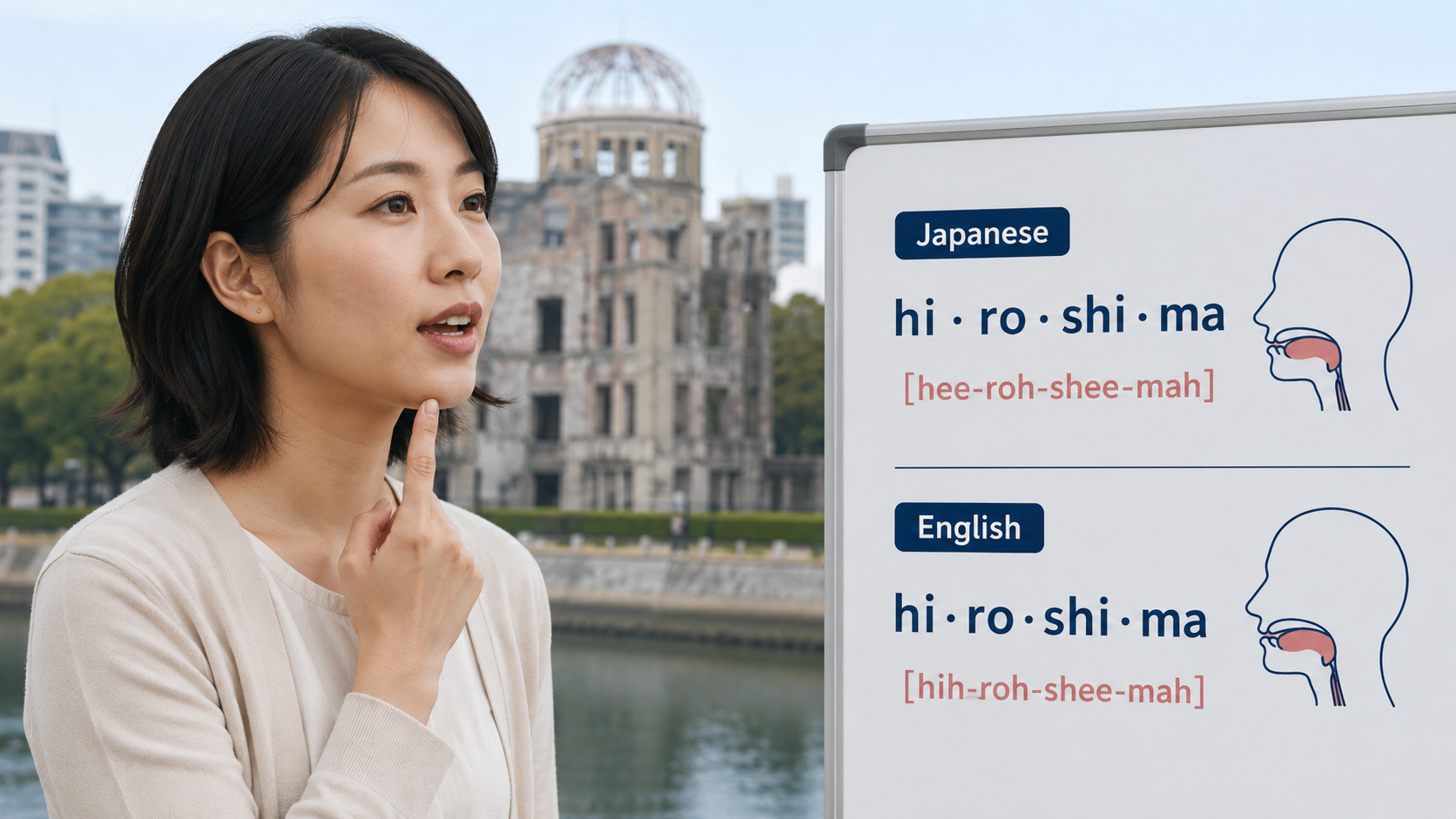
Hiroshima is pronounced “hee-roh-SHEE-mah” in Japanese, with four even, short syllables: hi-ro-shi-ma. In English, it’s most commonly said as “huh-ROH-shih-muh” or “HEER-oh-SHEE-muh,” with stress shifted onto the second syllable. Neither version is “wrong” exactly, but the Japanese pronunciation keeps each syllable short and evenly weighted, while English versions tend to stretch and stress certain syllables differently.
How Hiroshima Is Pronounced in Japanese
Syllable Breakdown
Japanese is a mora-timed language, which means each syllable, or mora, generally gets roughly equal length and emphasis, unlike English, which leans heavily on stressed and unstressed syllables. Hiroshima breaks into four morae:
- Hi (as in “hit,” but with a softer “h”)
- Ro (as in “roe”)
- Shi (as in “she”)
- Ma (as in “mah”)
Put together, it sounds close to “hee-ro-shee-ma,” said at a fairly even pace, without strongly punching any single syllable.
Pitch Accent
Japanese uses pitch accent rather than stress accent. In standard Japanese, Hiroshima pronunciation typically follows a flat-to-falling pitch pattern, where the pitch doesn’t dramatically rise and fall the way English stress does. This is part of why the word sounds noticeably different from most English pronunciations, even when the vowels are technically right.
IPA Transcription
For readers familiar with the International Phonetic Alphabet, the Japanese pronunciation is roughly written as /hiɾoɕima/. The “ɕ” symbol represents a sound similar to the English “sh,” but produced slightly further forward in the mouth.
How Hiroshima Is Pronounced in English
English speakers usually adapt the word to fit English stress patterns, which means picking one syllable to emphasize more than the others.
Common English Pronunciation
The most widely used English pronunciation places stress on the second syllable: “huh-ROH-shih-muh” (IPA: /hɪˈroʊʃɪmə/ or /hɪˈroʊʃəmə/). This version is common in American and British broadcast media.
A Common Alternative
Some speakers instead stress the third syllable, saying something closer to “HEER-oh-SHEE-muh,” with a long “ee” sound on both the first and third syllables. This version is also widely heard and isn’t considered incorrect, just a different anglicized version of the same word.
Why English Versions Vary
English doesn’t have a single, standardized way of adapting Japanese pronunciation, so different newscasters, teachers, and public figures have popularized slightly different versions over the decades. Neither major English variant matches the Japanese original exactly, since English speakers naturally apply English stress patterns to foreign words.
Common Mistakes People Make
Mistake: Adding an extra syllable. Some English speakers accidentally pronounce it as five syllables instead of four, inserting an extra vowel sound that doesn’t exist in the Japanese original.
Mistake: Over-stressing the first syllable. Saying “HIRO-shima” with heavy emphasis on “HI” is a common error, often influenced by the unrelated word “hero,” which sounds similar but isn’t connected to the name at all.
Mistake: Flattening the “shi” sound into “shee” too aggressively or too softly. The “shi” syllable should sound clearly like “she,” not “shy” or a soft “zh” sound.
Mistake: Assuming there’s only one “correct” English pronunciation. Both major anglicized versions are widely accepted; there isn’t a single official English pronunciation enforced by dictionaries or media style guides.
Mistake: Confusing it with similarly spelled place names. Hiroshima pronunciation is sometimes mixed up with Fukushima, another Japanese city name that gained international attention after the 2011 nuclear disaster. The two names share a similar rhythm but are entirely different places with different histories.
Step-by-Step: How to Practice Saying It
- Break it into four parts. Say “hi,” then “ro,” then “shi,” then “ma” slowly and separately.
- Keep each syllable short. Avoid stretching any single syllable longer than the others if you’re aiming for the Japanese pronunciation.
- Speed it up gradually. Once each syllable feels comfortable, start saying them together at a natural speaking pace: “hi-ro-shi-ma.”
- Compare to a native audio source. Listening to a Japanese news broadcast or language-learning audio clip that includes the word can help calibrate your ear, since written guides only go so far.
- Decide which version fits your context. If you’re speaking Japanese or want to closely match native pronunciation, use the four-syllable, evenly weighted version. If you’re speaking English and want to sound natural to an English-speaking audience, the anglicized stress pattern is generally expected and understood.
Why Pronunciation of This Word Matters
Hiroshima is the name of a real city in Japan with roughly 1.2 million residents today. It’s also the site of the first use of a nuclear weapon in warfare, on August 6, 1945, an event that remains a significant part of 20th-century history and a place of memorial and reflection in Japan. Because the name carries that historical weight, getting the pronunciation reasonably close, even if not perfectly native, is often seen as a small but meaningful sign of respect when discussing the city, its history, or its people.
This is also a city with an active, modern identity beyond its historical association. Hiroshima today is known for its food culture, including a distinct style of okonomiyaki (a savory layered pancake dish), as well as its rebuilt downtown, the Hiroshima Peace Memorial Park, and nearby attractions like Miyajima Island.
Real-World Examples
Example 1: A news anchor reporting on a historical anniversary commemoration in Hiroshima typically uses the “huh-ROH-shih-muh” pronunciation, the most common version heard in American broadcast English.
Example 2: A student studying Japanese in a language class learns to say “hi-ro-shi-ma” with even, short syllables, matching how a native speaker would say it in conversation.
Example 3: A traveler planning a trip to Japan practices the Japanese-style pronunciation before the trip, since locals are likely to understand and appreciate the more accurate version, even if the traveler’s accent isn’t perfect.
Key Facts
- Hiroshima has four syllables in Japanese: hi-ro-shi-ma.
- Japanese pronunciation gives each syllable roughly equal length and weight.
- Common English pronunciations stress either the second or third syllable.
- The IPA transcription for the Japanese pronunciation is approximately /hiɾoɕima/.
- Hiroshima is a real, present-day Japanese city with over a million residents.
- The name is sometimes confused with Fukushima, a separate Japanese city.
FAQ
How do you pronounce Hiroshima correctly?
In Japanese, it’s said as four short, even syllables: hi-ro-shi-ma. In English, the most common version stresses the second syllable, sounding like “huh-ROH-shih-muh.”
Is there one official English pronunciation?
No. English speakers use a couple of slightly different anglicized versions, and no single one is officially mandated by dictionaries or style guides.
Why does Hiroshima sound different in Japanese versus English?
Japanese uses even-length syllables and pitch accent, while English relies on stressed and unstressed syllables. When English speakers say the word, they naturally apply English stress patterns instead of the original Japanese rhythm.
Is it disrespectful to mispronounce Hiroshima?
Most native Japanese speakers don’t expect non-native speakers to perfectly replicate Japanese pronunciation. Making a reasonable effort is generally appreciated, especially in formal or historical contexts.
What’s the difference between Hiroshima and Fukushima?
They’re two separate Japanese cities. Hiroshima is in western Japan and is associated with the 1945 atomic bombing. Fukushima is in eastern Japan and is associated with the 2011 nuclear power plant disaster following an earthquake and tsunami. Their names sound similar but refer to entirely different places and events.
Where can I hear the correct pronunciation?
Japanese news broadcasts, language-learning apps with native audio, and travel or documentary content filmed in Japan are reliable ways to hear the native pronunciation spoken naturally.
Key Takeaways
- Hiroshima has four short, evenly weighted syllables in Japanese: hi-ro-shi-ma.
- English speakers commonly stress either the second or third syllable instead.
- Neither major English pronunciation is officially “correct” over the other; both are widely understood.
- Common mistakes include adding extra syllables or over-stressing the first syllable like the word “hero.”
- Hiroshima is a real, modern Japanese city, not just a historical reference point.
Conclusion
Getting Hiroshima pronunciation right comes down to understanding two different systems: the short, even syllables of Japanese and the stress-based rhythm of English. Neither version is something to stress over perfecting, but knowing the difference helps explain why the word sounds different depending on who’s saying it, and gives you a clearer, more confident way to say it yourself.
Few places in American whiskey carry as much history as Buffalo Trace Distillery in Frankfort, Kentucky. So when floodwaters from the Kentucky River swept across its 200-acre campus in April 2025, the bourbon world watched closely. The damage was severe. The recovery was remarkable.
Here’s a thorough look at what happened, why it matters, and what it means for one of America’s most storied distilleries.
Direct Answer: What Happened to Buffalo Trace Distillery in the Flood?
In early April 2025, record-setting rainfall caused the Kentucky River to overflow its banks and flood the Buffalo Trace Distillery campus in Frankfort, Kentucky. The river crested at 48.2 feet — the second highest level in Frankfort’s recorded history. Nearly every phase of production was impacted, as were several warehouses where whiskey is aged. The distillery temporarily closed, but within months had fully resumed operations.
A Distillery Built on the Banks of History
To understand the flood, you first need to understand the relationship between Buffalo Trace and the Kentucky River. It’s not a coincidence that the distillery sits right along the water.
In the 1800s, long before the Buffalo Trace name was attached to the distillery, the river served as a floating highway to bring in grain and other production essentials and to transport barrels of whiskey to markets along the Ohio and Mississippi rivers. Even today, river water cools down production equipment.
The distillery began producing bourbon 200 years ago, making it the nation’s oldest continuously operating facility. That long run alongside the river hasn’t always been peaceful. Because of the Kentucky River’s history of flooding, Buffalo Trace says it has a lot of experience with flood management, which is why it had a plan in place for just such an emergency. Some of the older buildings on campus even contain marks measuring where previous floodwaters reached.
In one of the oldest buildings dating back to the 1700s, markings show flood levels throughout history. Last year’s flood shows the highest — “2025” is literally right at the ceiling.
What Caused the April 2025 Flood?
The flooding wasn’t caused by a single storm but by days of sustained, heavy rainfall across central Kentucky.
According to the National Weather Service, the April 2025 rainfall in Frankfort, Kentucky, was the second highest amount of rain ever recorded for the city. That relentless downpour sent the Kentucky River surging far beyond its normal banks.
At their peak, floodwaters reached the second highest recorded levels in the distillery’s 200-plus year history, with the Kentucky River cresting at 48.24 feet. For context, the highest flooding on record for the Frankfort Lock was 48.47 feet in 1978.
The April 2025 event came heartbreakingly close to breaking that record — and the physical evidence was unmistakable.
How Bad Was the Damage?
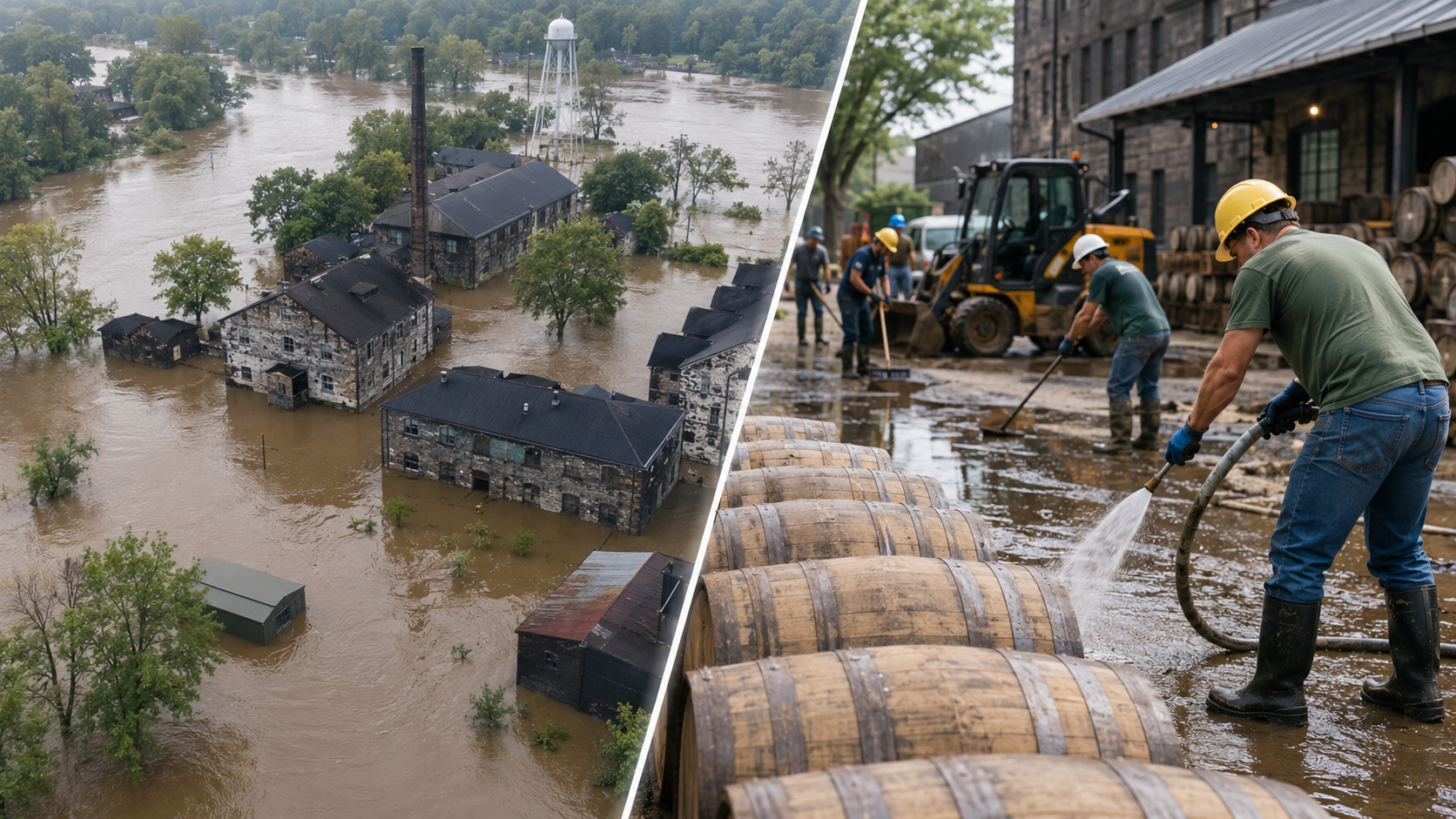
The scope of the flooding was wide. A massive flood sent the Kentucky River surging over its banks, inundating most of the 200-plus-acre distillery grounds on its main campus in Frankfort.
As of the peak flooding, the lower levels of several Buffalo Trace buildings were flooded, putting parking lots and cars underwater. The visitor center was significantly affected. Teams started clean-up inside the Buffalo Trace Visitor Center, which saw flooding on the first floor and required a period for repair.
Production equipment bore the brunt of the damage. Floodwaters damaged modern equipment at the distillery, halting production — specifically electronics, power pumps, and sensors, which were the longest to recover.
Danny Kahn, a master distiller for Buffalo Trace’s parent company, says he still experiences “a little PTSD” when recalling those frantic days. He described watching the scene from higher ground: “It actually looked kind of calm, but I knew that it was not calm because we could see buildings were under 10 feet of water. It was really quite overwhelming.”
One detail that caught attention online was an image of bourbon barrels floating in the parking lot. No chance for sneak samples, though — the barrels were empty.
What Happened to the Whiskey Barrels?
This was the question on every bourbon drinker’s mind: were the aging barrels — and the precious whiskey inside them — safe?
The news was better than many feared. General Manager Tyler Adams confirmed that the flood did not impact existing barrels but caused delays in production.
That said, any barrels that came into contact with floodwaters still required thorough inspection. Inspection of any barrels touched by the flood began on April 10 and was set to be ongoing until all had been appropriately assessed. This is a very involved process, including both barrel inspection as well as the same rigorous quality testing every bottle of whiskey undergoes at Buffalo Trace Distillery.
Based on historical knowledge from previous floods, Buffalo Trace has been successful in recovering any barrels that might have been affected by floodwaters. Master Distiller Harlen Wheatley issued a firm statement on the matter: “We have never, nor will we ever, compromise on the quality or safety of the whiskey we make.”
By the fall of 2025, quality control assessments found only small amounts of aging whiskey were impacted.
Buffalo Trace’s Emergency Response
When river levels started rising, the distillery’s emergency protocols kicked in immediately.
Activating their flood plans, Buffalo Trace workers shut down the distillery and did what they could to safeguard equipment. After that, all they could do was watch and wait.
Tyler Adams explained: “As the river was rising, we were already making plans of how we were going to recover. We had a multi-stage re-opening plan.”
Fans of the distillery reached out in large numbers wanting to volunteer. Buffalo Trace fans swamped the distillery with offers to pitch in, but the distillery politely declined and suggested they might assist area residents instead. Crews handled the work internally — removing debris, sanitizing equipment, and pumping out remaining water as it receded.
How Quickly Did Buffalo Trace Recover?
The recovery was faster than the severity of the damage might suggest — a credit to the distillery’s preparation and the size of its team.
As of April 11, 2025, Buffalo Trace had already resumed shipping its finished goods, with bottling expected to restart within the following week. CEO Jake Wenz stated that “Restoration of this National Historic Landmark is our top priority to ensure a quick return to making quality, award-winning whiskey and welcoming guests from around the world.”
Five months later, production at the distillery was back to normal, including some of the most sought-after bourbons. Its lineup includes the namesake flagship brand, Buffalo Trace, as well as Eagle Rare, W.L. Weller, and Blanton’s.
Getting visitors back was also a priority — and not just for the distillery’s sake. Adams noted that people make reservations from around the world, often months in advance, and that welcoming visitors back more quickly was better for the entire community, since visitors patronize the distillery but also eat in restaurants and shop in stores.
A History of Flooding: This Wasn’t the First Time
Buffalo Trace has faced the Kentucky River’s wrath before. River flooding has been a sporadic part of the distillery’s history, including big ones in 1937 and 1978.
What made 2025 different was the sheer scale. The rainfall was historically extreme. The river came within inches of its all-time flood record. And the distillery had just finished a major expansion. Buffalo Trace had just completed a decade-long, $1.2 billion expansion to double distilling capacity — meaning far more infrastructure was now at stake than in previous flood events.
Still, the experience of past floods shaped how the distillery responded. Emergency protocols, flood markers on buildings, and institutional memory all played a role in limiting the damage.
Common Misconceptions About the Flood
“The bourbon supply was destroyed.”
Not true. While some barrels were affected, quality control assessments found only small amounts of aging whiskey were impacted. The flagship products — Buffalo Trace, Eagle Rare, Blanton’s, and others — continued to be produced and shipped.
“Buffalo Trace was permanently closed.”
Also false. The closure was temporary, and production resumed within weeks of the floodwaters receding.
“Flooded barrels mean unsafe whiskey.”
The distillery conducted thorough inspections of every barrel that came into contact with floodwaters. Based on historical knowledge from previous floods, Buffalo Trace has been successful in recovering any barrels that might have been affected. None of the compromised whiskey made it to market.
What Changed After the Flood?
The April 2025 flood left some permanent marks — and prompted meaningful changes.
New flood protocols were created to improve future recovery efforts. High-water marks from 2025 are now etched into the campus’s historic buildings, joining the record of past events. Tour guides reference the flood as part of the distillery’s living history.
The experience also reinforced a difficult truth about the distillery’s location. As Tyler Adams put it: “This area being a National Historic Landmark, being right on the river, there’s only so much you can do to hold back that water. Your best bet is to prepare for it, do what you can. But holding back that water? It’s really inevitable it’s going to make it into some spaces.”
Key Facts
- The Kentucky River crested at 48.2 feet during the April 2025 flood — the second highest in Frankfort’s recorded history.
- April 2025 rainfall in Frankfort was the second highest ever recorded for the city.
- The distillery has been producing bourbon for 200 years, making it the nation’s oldest continuously operating facility.
- Nearly every phase of production was impacted, as were several warehouses where whiskey is aged.
- The distillery had just completed a $1.2 billion, decade-long expansion prior to the flood.
- Full production returned within five months, including Blanton’s, Eagle Rare, W.L. Weller, and the flagship Buffalo Trace bourbon.
- Quality control assessments found only small amounts of aging whiskey were impacted.
Frequently Asked Questions
Did the Buffalo Trace Distillery flood in 2025?
Yes. A massive flood, caused by days of unrelenting rain, sent the Kentucky River surging over its banks, inundating most of the 200-plus-acre distillery grounds in Frankfort, Kentucky in April 2025.
Was Buffalo Trace’s whiskey damaged in the flood?
Minimally. Barrels that contacted floodwaters were inspected and tested, and quality control assessments found only small amounts of aging whiskey were impacted.
Is Buffalo Trace still open after the flood?
Yes. Five months after the flood, production was back to normal, including some of the most sought-after bourbons in its lineup.
How high did the water get at Buffalo Trace?
Buildings were under approximately 10 feet of water at the flood’s peak, according to the distillery’s master distiller.
Has Buffalo Trace flooded before?
Yes — river flooding has been a sporadic part of the distillery’s history, including significant events in 1937 and 1978.
Did the flood affect bourbon prices or availability?
The flood caused production delays, but the distillery resumed shipping finished goods as early as April 11, 2025, with bottling restarting the following week. Any long-term supply effects were limited.
Key Takeaways
- The April 2025 flood was one of the worst in Buffalo Trace’s 200-year history, with the Kentucky River reaching near-record levels.
- Most of the distillery’s 200-acre campus was inundated, and production halted temporarily.
- Electronics, pumps, and sensors were the hardest-hit equipment; bourbon barrels were largely protected, with minimal whiskey loss confirmed.
- Buffalo Trace’s established emergency protocols and experienced team enabled a faster-than-expected recovery.
- Full production of all major brands resumed within five months.
- The distillery has updated its flood protocols and continues to operate alongside the Kentucky River — the same waterway that made it possible in the first place.
The Flood That Couldn’t Stop a 200-Year-Old Tradition
There’s something fitting about the fact that the same river that built Buffalo Trace periodically tries to reclaim it. The Kentucky River gave the distillery its reason to exist — and has tested it repeatedly over two centuries. The 2025 flood was the most serious test in modern memory, and the distillery met it the same way it’s met every challenge: with preparation, hard work, and an unwillingness to cut corners on quality.
The high-water mark etched near the ceiling of that 1700s-era building isn’t just a flood record. It’s a reminder of what the distillery endured — and survived.
-

 Lifestyle7 days ago
Unblocked Games: What They Are, How They Work, and What to Watch For
-

 News2 days ago
Was Kash Patel Removed? What the Search Actually Means
-

 Lifestyle7 days ago
Russia-Ukraine Ceasefire: What’s Been Agreed, What Hasn’t, and Where Talks Stand
-

 News2 days ago
Trump Canada Bridge: What’s Going On With the Gordie Howe International Bridge
-
 Sports2 weeks ago
UCLA Softball: History, Championships, and What Makes the Program Elite
-

 News2 weeks ago
Delta Upgrade Dance Off at Salt Lake City: The Viral Gate Agent Story Explained
-

 News2 weeks ago
Auburn vs Nevada Prediction: NIT Quarterfinal Breakdown and Final Result
-
 News2 weeks ago
April 2026 Calendar: Dates, Holidays, and What to Know About the Month